
Low battery voltage is the most common reason why my rc car is blinking red. You can safely keep using the car if you stop immediately to charge the battery pack. To confirm this, look for a solid red light on your remote or a flashing light on the vehicle, then measure the battery voltage using a simple digital tester if you have one available. If the light persists after a full charge, the connection between the receiver and transmitter is likely lost.
Why your car light is blinking red
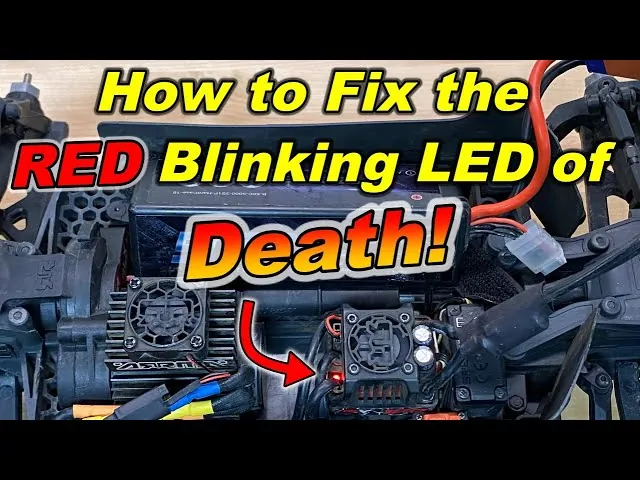
The blinking light is a diagnostic signal from the internal electronic speed controller or the receiver. It tells you that the system has detected a fault that prevents safe operation.
| What you notice | What it usually means | What to do first |
|---|---|---|
| Fast flashing red light | Low battery voltage | Charge the battery pack |
| Slow blinking red light | Connection lost | Rebind the transmitter |
| Solid red light | Overheat protection active | Let the motor cool |
| Pulsing red light | Throttle trim misaligned | Reset the throttle knob |
| Intermittent red flickering | Loose wiring connection | Check battery plugs |
| Constant flashing after crash | Internal damage detected | Inspect for broken parts |
If the light blinks fast the moment you pull the trigger, the battery voltage is dropping below the ESC’s cutoff threshold under load. Replace the pack if it fails to maintain power under stress. A healthy battery should hold its charge without triggering this warning during the first five minutes of use.
If you see a solid light, don’t attempt to bypass the thermal cutoff. Wait at least ten minutes before attempting a restart.
Distinguish between a loose wire and a signal issue by gently wiggling the battery leads while the car is powered on. If the light flickers in sync with your movement, you have a physical break in the insulation or a loose spade connector. Solder these connections immediately to prevent a short circuit that could fry the electronic speed controller. If the light remains steady despite your wiggling, focus your efforts on the receiver’s antenna placement.
Low power in the battery pack
A depleted battery is the primary cause of a flashing red light in most modern remote-controlled vehicles. When the voltage drops below the manufacturer’s cutoff threshold, the onboard computer prevents the motor from drawing more power to protect the cells from permanent damage. This is a safety feature designed to prevent the lithium-polymer cells from dropping into a state where they can no longer hold a charge.
To confirm this, plug your battery into the provided wall charger. If the charger light turns green after the recommended charging time, usually between 2 and 4 hours depending on the capacity, the battery was simply empty.
If the light on the car remains red even after a full charge, the battery cells may have degraded beyond their useful life. You can tell this is the cause if the car struggles to move or the light stops blinking when the car is stationary but starts again the moment you pull the trigger.
Most users mistakenly assume a battery is fine if it holds a charge for a few minutes. If the car loses power suddenly under load, the internal resistance has climbed too high. You should have a technician test the battery; if they determine the cells are failing, discard the battery immediately.
If the technician finds the cells are healthy but the car still flashes red, the issue is likely a loose connection at the terminal. Clean the contacts with isopropyl alcohol to ensure a firm, conductive path.
Loss of signal from the transmitter
The receiver inside your car flashes red when it can’t find a matching signal from your remote controller. This often happens if the batteries in the remote are weak or if the two devices have lost their digital “handshake.” If you changed the transmitter batteries or moved the car far away from your location, the signal might have dropped.
To check if this is the issue, bring the remote within 3 feet of the car. Turn both devices off, then turn the car on first, followed by the remote. If it continues to blink, you must perform the binding process specific to your model.
You can tell this is the cause if the steering still works while the light blinks, but the throttle doesn’t respond. Many users mistakenly assume the motor is burnt out when they see this behavior. Replacing a functional motor costs time and money that could be saved by simply re-pairing the transmitter.
If you’re operating in a crowded area with other enthusiasts, interference from nearby 2.4GHz signals can also cause a drop. If your receiver blinks only when others are driving, move at least 20 feet away from the group.
If the light turns solid, the problem is environmental interference rather than a hardware fault. Always prioritize fresh alkaline batteries over rechargeable ones during this test, as low voltage often prevents the handshake from completing even when the remote appears to be powered on.
Overheating of the electronic system
The speed controller will flash a red light if the internal temperature exceeds its safety limit. This happens if you run the car through thick grass, deep sand, or up steep inclines for more than 10 minutes at full throttle. The internal sensors detect the heat buildup and cut power to the motor to prevent the circuit board from melting.
To confirm this, touch the motor or the speed controller casing carefully. If the surface is too hot to hold for more than a second, you have found the problem. The fix is simple: turn the car off and place it in a shaded area for at least 15 minutes. Once the components return to room temperature, the blinking should stop.
You can tell this is the issue if the car was running perfectly fine for several minutes before the light started blinking. If the car starts fine but blinks only after heavy use, you’re pushing the motor harder than the current gearing allows.
Most users make the mistake of trying to restart the vehicle immediately. This forces the internal thermal switch to trip again, which can eventually fry the speed controller’s internal capacitors. If you notice this happening on flat pavement, your gear ratio is likely too tall.
Switch to a smaller pinion gear to lower the load on the motor. If the light blinks while the car is cool, check for debris binding the drivetrain, as friction generates heat faster than the cooling fan can dissipate it.
When to stop and get help
You should stop trying to fix the car yourself if you notice any of the following signs that indicate a deeper hardware failure.
A burning plastic smell suggests a short circuit has already melted internal insulation. If you smell this, disconnect the battery immediately. Don’t attempt to power it on again, as the heat can warp the chassis or ignite the chassis plastic.
Visible smoke means the electronic speed controller has suffered a catastrophic failure. This is a fire hazard that can release toxic fumes. Move the unit to a concrete floor or an outdoor space away from flammable materials until it cools completely.
Swollen or punctured battery cells require specialized disposal. If a battery feels soft or looks “puffy,” it’s chemically unstable. Never throw these in a standard trash bin, as they can ignite in transit. Most local recycling centers have specific drop-off bins for lithium-polymer hazards.
A broken antenna or exposed copper wires prevent the receiver from functioning. Repairing these requires precision soldering skills. If you lack experience with a soldering iron, you risk bridging connections on the circuit board, which will permanently fry the receiver.
If you encounter these issues, stop using the device. Contact the manufacturer’s support line or take the unit to a professional hobby shop. These experts have the diagnostic tools to test individual components without risking further damage to your equipment or your personal safety.
Frequently asked questions
How long should I charge my battery?
You should charge your battery for the time specified in your manual, which is typically 2 to 4 hours for standard packs. Never leave a battery charging unattended, and remove it from the charger once the indicator light shows it’s full. If the battery feels hot or the charger shows an error code, stop the process immediately and check the battery’s condition.
Is it safe to drive with a blinking light?
It isn’t safe to drive the car while the light is blinking, as this indicates the system has entered a protective mode to prevent further damage. Continuing to force the car to move can cause the motor to burn out or the battery to fail completely. Always resolve the indicated fault before you attempt to operate the vehicle again.
Can I use a different battery?
You can use a different battery only if it matches the exact voltage and connector type required by your car’s manual. Using a battery with a higher voltage than recommended will likely fry the electronic speed controller, while a lower voltage will result in poor performance or constant error lights. Always check the label on the battery and the specs printed on the car chassis before you connect anything.
Why does the light blink only when I turn the wheel?
The light blinks during steering if the steering servo is drawing too much current, which often happens if the wheels are stuck or the linkage is bent. This excess draw lowers the voltage available to the receiver, causing it to think the battery is dead. Check that the front wheels move freely by hand and that no debris is blocking the steering mechanism.
Does the blinking light mean the car is broken?
The blinking light doesn’t necessarily mean the car is broken, as it’s often just a warning signal for low power or a signal loss. Most of these issues are resolved by charging the battery or rebinding the transmitter. You only need to worry about the car being truly broken if you smell burning or see physical damage to the wires.
What happens if I ignore the red light?
If you ignore the red light, you risk permanently damaging the battery cells or burning out the electronic motor. The light is a warning from the car’s computer that it can’t operate within safe parameters. Ignoring this signal will lead to a total loss of function and could result in the vehicle becoming a fire hazard during operation.
Conclusion
If the issue continues despite these checks, don’t worry. You should reach out to the manufacturer’s support team for help with potential internal hardware faults. They’ll guide you through any necessary repairs so you can get back to driving your car outside as soon as the weather clears up.