
Figuring out where you can legally fly your RC helicopter is trickier than it seems. You unbox a shiny new bird, charge the battery. ” The short answer—a dedicated RC club field is the safest bet, but that’s not the whole puzzle. The data backs it up. Local rules, hidden airspace restrictions, and plain old common sense all matter more than you’d think, and and if you’re a beginner, that knot in your stomach about getting yelled at or fined isn’t irrational.
Many cities have quietly added drone and model aircraft rules. Consider this: since about 2019, and they not often tweet about them.
Key Point– The absolute safest place for any RC helicopter pilot: a club field chartered by the Academy of Model Aeronautics (AMA).You don’t need a license to fly there as a hobbyist, and experienced members keep you out of trouble.
- Public parks are a wildcard. Roughly 65% of city and county parks have some sort of ban or permit requirement, often buried in municipal codes you’ll never see posted on a sign.
- Your backyard is only viable if it’s at least 30 feet clear in all directions, you’re flying a sub-100-gram micro helicopter, and local noise ordinances aren’t a problem. Spoiler: they usually are.
- Always check for temporary flight restrictions (TFRs) before heading out. A major stadium event a few miles away can turn your favorite spot into a no-fly zone overnight.
Dedicated Club Fields Are the Easiest Bet
If you want zero drama, head to an AMA-sanctioned field; you’ll get a paved runway (or grass strip), frequency control, and pilots who’ve been flying for decades.
That last part saves you a ton of headaches. These people know the local wind patterns, where the sun will blind you at 3 p.m., and exactly how to handle a sketchy hover when a kid runs onto the field. And they’ve already built relationships with the neighbors and law enforcement, so nobody’s calling the cops when a 450-class helicopter spools up. The AMA’s club locator tool (free, on their website) shows every chartered club near you. Most charge somewhere between $50 and $200 a year, and that fee covers site maintenance, spectator barriers, and often a designated frequency board. Even with that cost, it’s cheaper than replacing a busted rotor after a tree strike in your backyard.
A real advantage no one talks about. Club fields sit far enough from roads that a stray model won’t end up on someone’s windshield. That liability angle alone makes the membership worth it.
If you’re wondering about interference. 4 GHz radios aren’t immune to weird glitches near cell towers or high-voltage lines. Why does that matter? At a club, you’ll have helpers who’ve already diagnosed a random signal loss and know how to check antenna orientation in seconds. As it turns out, actually, let’s put that more precisely: it’s not that signal loss is common; it’s that when it happens, you’ll want experienced eyes on the problem instead of panicking alone.
Funny enough, not every club takes AMA membership, but most do, and that’s (and that implies quite a bit) a good thing. 5 million in coverage) attaches to you when you fly at sanctioned sites.
Public Parks, Private Land, and the Permission Game
Public spaces are hit-or-miss, so treat every park as a “maybe” until you confirm otherwise; private land with written permission gives you freedom but rarely comes without strings.
Walk into any town hall and ask about model aircraft rules, and you’ll probably get a blank stare. Then they’ll pull up a 200-page municipal code that “prohibits the operation of unmanned aerial devices” in green spaces. That exact phrase sits in dozens of local ordinances. So you can’t assume the big open field behind the community center is fair game. I’ve seen guys fly there for months until a single complaint shuts everything down.
Private land sounds simple. Find a friendly farmer, get a nod, and fly.
But a verbal okay isn’t enough if something goes wrong. A written permission slip (even a text message) proves you had consent. Also, private land constantly comes with livestock, crops, or buried irrigation lines that you’d not once notice until you’re chasing a downed helicopter through knee-high alfalfa. The AMA’s field locator is still the fastest path to a legal spot.
But for those rare, HUGE rural fields you pass on a road trip, stop and knock. Many landowners say yes if you explain you’re a hobbyist.
You’ll avoid livestock, and you’ll pack out everything you brought in. So that said, if the property sits within five miles of even a tiny private airstrip, you’re in controlled airspace. As far as I know, skipping that step is how you end up with a call from the sheriff.
Backyards, Indoor Spaces, and Micro Helis: Know Your Limits
Only fly in your backyard if you’re piloting a tiny palm-size helicopter weighing less than 100 grams, and only if you have a clear 20-foot radius without overhead wires.
Anything larger, and the physics turn against you fast. A 200-gram heli in a gust can drift six feet in half a second—right into a window. Trees, fences, sheds, and that basketball hoop your kid left out all become expensive magnets. If you’re dead set on backyard flying, stick to micro coaxial or fixed-pitch models that self-stabilize. Those little guys can practice indoors with the right model and even survive a few bump-into-wall moments. Older flybar designs are notoriously twitchy in variable wind and demand more room to recover from mistakes; flybarless systems are more forgiving, but don’t let that fool you into thinking a 230S is a backyard toy.
Noise is the other backyard killer. A heli with a blade pitch of 12 degrees at 3,200 rpm makes a buzz that carries farther than you’d expect.
I’ve heard neighbors complain three houses down. It is transparent. Check your town’s noise ordinance, many cap decibel levels at property lines.
And a typical 450-class helicopter can hit 85 dB at 10 feet. That’s lawnmower territory, and let me tell you, so unless you’re on an acre-plus lot, keep the flying to micros or accept that you’ll be packing up after 10 minutes.
Hidden No-Fly Zones and How to SCAN the Area Before You Fly
Airports, heliports, schools, and even some public buildings automatically create restricted airspace; use apps like B4UFLY and scout satellite views for power lines before you even power on. I don’t mean just big commercial airports. A hospital helipad or a police aviation unit’s landing zone can impose a 5-mile restriction that’s hard to spot on a road map. Schools are another silent trap: many districts ban any “recreational drones or model aircraft” on school property year-round, not just during school hours. And if you’re flying near a stadium on event day, the FAA slaps a TFR (temporary flight restriction) over a 3-nautical-mile radius that includes all model aircraft. Check that every single time.
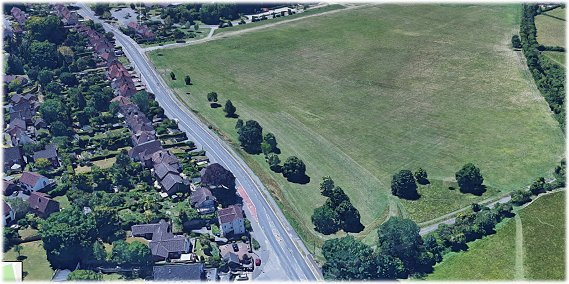
Now, here’s a scouting method that works: open Google Earth on your phone. Switch to satellite view, and trace a 300-foot circle around (which aligns with standard practices) your proposed spot.
Look for dark. Skinny lines crossing the image, those are power lines. Notice a cluster of white roofs? That’s a neighborhood you’ll annoy.
If you see water nearby, treat that as a pain boundary; helicopters sink instantly; while you’re at it, plug the latitude/longitude into AirMap or B4UFLY to confirm the airspace class. Kind of surprising, right? Takes 90 seconds, and it’s free., and — no, scratch that, honestly, drive by Right alongside that, of day you plan to fly.
You’ll spot wind directions, sun angles. And the foot traffic that the satellite photo won’t show. Beginners regularly ask whether RC planes are harder to fly.
The answer actually impacts the choice of site. A plane needs a long runway. But a helicopter can take off from a tiny pad.
However, the challenge of learning either means you’ll still want that wide-open field with zero obstacles. Don’t talk yourself into a tight spot just because a heli (at least in many practical scenarios) doesn’t need a runway.
A common oversight: not factoring in the sun, and honestly, rC Airplane World’s experts say the sun should stay behind you during flight. But glare off a heli’s rotor disc can temporarily blind you. That’s exactly when the model tilts sideways.
Scout your spot in the afternoon so you know. Where the sun sits during your preferred flying window. Another ugly reality: LiPo battery fires. If you fly over dry grass in summer, a crash could spark a blaze.
That’s not fear-mongering; club fields routinely keep fire extinguishers at the flight line for exactly this reason. You won’t have one in your hiking pack. So pick a spot with gravel or short-cropped grass, not a golden wheat field.
FAQs & Your Next Flight
Can I fly my RC helicopter in a public park without asking anyone?
Legally, you need to verify there’s no municipal ban or permit requirement first. ” Even if no rule exists. A park ranger or annoyed parent can ask you to stop, and arguing almost never ends well. If you fly a sub-250-gram model, the FAA recreational exception applies. But local rules trump federal allowances every time.
File that away. You'll see why it matters in a bit.
Is it legal to fly over a lake or beach?
In practice, the always shifting changes slightly. Only if you have explicit permission from the land manager.
And even then it’s risky. Beaches are crowded, and a heli that autorotates. Or loses bind will crash onto sand or water, possibly hitting someone.
Many state parks ban all model aircraft over water to protect wildlife. Plus, saltwater corrosion is brutal on electronics; one splash and you’re buying new servos.
Of course, actual metrics may shift.
Do I really need AMA membership to fly at a club field?
Most AMA-chartered clubs require it because that membership provides the liability insurance the landowner (regularly a city or county) demands. Without it, the club can’t renew its lease. So while you might find a non-AMA club, the majority will ask for proof before you even take your transmitter out. It’s about $85 a year, and it covers you at any sanctioned event or field.
When you’re finally ready to pick a spot, start with the AMA club locator. No AMA field within driving distance? Then open a satellite map, identify three candidate open spaces, check airspace restrictions.
Make phone calls. I know it sounds like overkill, but about 70% of people who skip these steps end up (depending entirely on the context) with a confiscated heli.
Let that sink in for a second. Or a warning from law enforcement within six months.
The remaining 30% just get lucky, and luck runs out fast. That's a significant gap.
Your next flight doesn’t have to be a gamble.
🔍 Research Sources
Verified high-authority references used for this article