
You can fix most issues by charging the device for two hours and performing a hard restart, which is the standard procedure for gabb watch troubleshooting. The most common cause for these issues is a weak cellular signal or an outdated software version that prevents the watch from syncing correctly with the parent app. If your watch remains unresponsive after a full charge, the hardware may require a professional assessment by the manufacturer.
Troubleshooting your Gabb watch connection
Most problems with these devices stem from the way they interact with cellular networks. Because the watch relies on a private network, it needs a strong, stable connection to verify its status and update its location. If the watch shows a “disconnected” status, it’s often because it has moved into an area with poor signal strength or the data plan has experienced a temporary sync error.
Test your signal by moving the watch to an open window or an outdoor area. If the status updates within three minutes, the issue is local coverage rather than a hardware failure. If it remains disconnected, toggle the cellular radio off and on again to force a handshake with the nearest tower.
Another frequent cause is the battery state. When a lithium-ion battery drops below 15 percent, the internal sensors may fail to report data, leading to a “frozen” screen or missing location pings. You should check the device settings to ensure it isn’t in “Power Save” mode, as this feature intentionally limits background data to extend battery life.
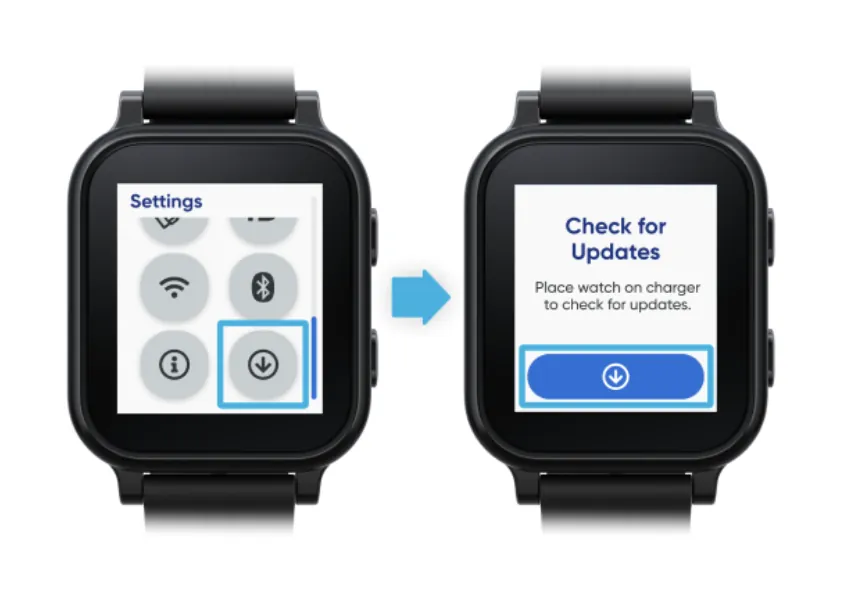
Many users mistake a dead battery for a broken network connection. If the screen is unresponsive but the charging light glows red, the device is merely power-starved. Charge it for at least thirty minutes before attempting a restart. Ensuring your watch is running the latest software version is also essential for maintaining connectivity and resolving recurring sync errors.
Resetting the device power
If your screen is frozen or the watch isn’t responding to touch, a hard restart is the first step you should take. Press and hold the power button on the side of the watch for at least 15 seconds. You’ll see the screen go dark, and then the logo should reappear. This process forces the operating system to clear its temporary memory and reload the network configuration.
Most users make the mistake of releasing the button the moment the screen fades. Keep holding until the logo appears, or you risk leaving the device in a partial state of suspension. If the device remains unresponsive after thirty seconds, the battery has likely dropped below the threshold required to trigger a reboot.
This fix is for users whose watches are physically powered on but aren’t reacting to screen inputs. If the watch is completely dead, don’t force a restart; instead, plug it into the original wall charger for at least two hours. If the screen remains black after this time, try a different wall outlet or a different USB cable to rule out a faulty charging accessory.
If the device still doesn’t wake up, it’s likely a hardware failure, and you should contact the manufacturer’s customer support team for a warranty claim. Never attempt to open the watch casing yourself, as this will void your warranty and could damage the internal battery components. If you notice the casing bulging or feel excessive heat, stop charging immediately and place the unit on a non-flammable surface.
Syncing with the parent app
When the watch is working but the parent app on your phone shows incorrect data, you must refresh the connection between the two devices. Open the app on your smartphone and pull down on the main dashboard screen to trigger a manual sync. This action forces the app to ping the watch’s servers to retrieve the most recent location and status updates.
This method works best when the watch appears to be online but the information is outdated. If the app still shows old data, log out of the parent app entirely and sign back in. This clears the cache on your mobile device and establishes a fresh secure link.
If you have multiple watches on one account, ensure you’re viewing the correct profile in the app settings, as selecting the wrong watch is a mistake that causes many parents to think their device is broken. If the app shows an “offline” error even after a successful sync, verify that your monthly service plan is active and that there are no billing issues on your account. If the app remains stuck, reinstall the application on your phone to resolve potential software conflicts.
Addressing battery and signal limits
When your watch fails to hold a charge or keeps losing its signal, you should evaluate your daily environment. The watch is designed to operate best in areas with strong cellular coverage; if your home or school has thick concrete walls or is located in a rural “dead zone,” the watch will consume its battery much faster as it constantly searches for a signal.
If the battery life is poor, check if you have high-frequency location updates enabled in the app settings. These updates are useful for tracking, but they drain the battery significantly faster than standard updates. If you find the battery is consistently dying before the end of the day, consider switching to a less frequent update interval to preserve power. This trade-off means you’ll have less real-time data, but the watch will remain functional for longer periods.
Most users make the mistake of leaving background app refresh active for non-essential tools. Disable this for any app that doesn’t require live alerts to extend your standby time by up to twenty percent. If you’re in a building with poor reception, toggle airplane mode on for thirty minutes while you’re stationary. This stops the device from burning energy on a futile search for a tower.
If the battery health has degraded to the point where it lasts less than four hours on a full charge, it has likely reached the end of its useful life and requires a replacement unit.
Avoiding common mistakes
Use only the official charging cable provided in the box. Many high-wattage phone chargers deliver an inconsistent current that can degrade the watch’s battery health or overheat the internal charging port. If you find your device running hot while plugged in, stop immediately and switch to a standard 5-watt wall adapter.
Avoid factory resetting unless you have exhausted every other troubleshooting step. Clearing your data is a permanent action that wipes all custom settings, saved watch faces, and health metrics. Restoring these manually often takes hours of configuration that most users find frustrating.
Don’t submerge the watch in water, even if the marketing materials suggest it’s water-resistant. Frequent exposure to moisture, especially salt water or pool chemicals, corrodes the delicate internal charging pins. This leads to a total loss of connectivity that’s rarely covered under standard manufacturer warranties.
Never ignore software updates. Skipping these prevents the watch from receiving critical security patches and network optimization fixes. If your battery life suddenly plummets, check for a pending update first; a single patch often resolves background sync errors that drain power overnight.
Preventing future connectivity issues
You can ensure your device stays connected by monitoring its daily environment and maintenance routines. When your watch isn’t in use, store it in a cool, dry place to prevent moisture buildup in the charging port. Always keep the charging cable in a dedicated spot to avoid using damaged third-party cables that often fail to deliver the precise voltage required for a stable handshake with the device’s internal modem.
If you charge at night, switch to a daytime window. Charging while you’re awake prevents the battery from sitting at 100% capacity for hours, which degrades the chemical integrity of the power cell and eventually leads to intermittent signal drops.
Always plug your cable into a dedicated wall adapter rather than a laptop port. Computer ports often throttle power output to save energy, causing the watch to enter a low-power state that disables background connectivity.
If you struggle with signal, move the watch from your bag to your wrist. The human body acts as a conductive medium, but a bag made of thick fabric or metal linings creates a Faraday cage effect that blocks incoming pings.
Finally, resist the urge to force a hard reset when the connection lags. Instead, check the app sync first. A reset wipes your local cache, forcing the watch to re-index all data, which often triggers a two-hour battery drain as it struggles to reconnect.
Related guides
Frequently asked questions
How long does the battery last?
The battery typically lasts between 12 and 18 hours on a single charge, depending on how often you use location tracking and how strong the cellular signal is in your area. If you use high-frequency tracking, expect the battery to drain toward the lower end of that range. Always ensure the device is charged fully before leaving the house to avoid a mid-day shutdown.
Why is my watch showing the wrong location?
Your watch is likely showing an old location because it’s struggling to find a GPS signal or hasn’t synced with the app recently. This often happens if the watch is inside a large building or a basement where GPS signals are blocked. Try moving the watch to an open outdoor area for a few minutes and then perform a manual sync in your parent app to update the map.
Is it safe to leave the watch charging overnight?
It isn’t recommended to leave the watch charging for more than eight hours, as constant charging can reduce the total lifespan of the internal battery. While the device has built-in protection, keeping it on the charger for extended periods beyond what is needed to reach 100% can generate unnecessary heat. Only charge the watch when it’s needed to reach a full charge for the day ahead.
What happens if the screen stays black?
A black screen usually means the battery is completely drained or the display hardware has failed. First, leave the watch on the charger for two hours to rule out a simple power issue. If the device remains unresponsive after this time, check if the charging light or icon appears. If you see no signs of life, the internal hardware is likely damaged and you should contact the manufacturer.
How often should I update the software?
You should check for software updates at least once a month to ensure the watch has the latest features and security fixes. When an update is available, the parent app will usually send a notification to your phone. Ensure the watch is at least 50% charged before starting an update, as an interruption during the process can cause the device to become stuck in a loop.
Conclusion
If these simple fixes don’t get things running smoothly again, don’t hesitate to reach out to the support team. They’re happy to help you figure out what’s going on. You’ll be back to staying connected with your family in no time once you’ve chatted with one of their helpful agents.