
A dead battery or a loose connection is the most likely reason for a remote control boat not working, accounting for the vast majority of cases we see. You can confirm this quickly by checking the charging status on your battery pack or inspecting the battery compartment for signs of corrosion or a poor fit. If the power source is sound, the issue usually involves a loss of signal between the controller and the craft’s internal receiver.
Why your remote control boat isn’t working
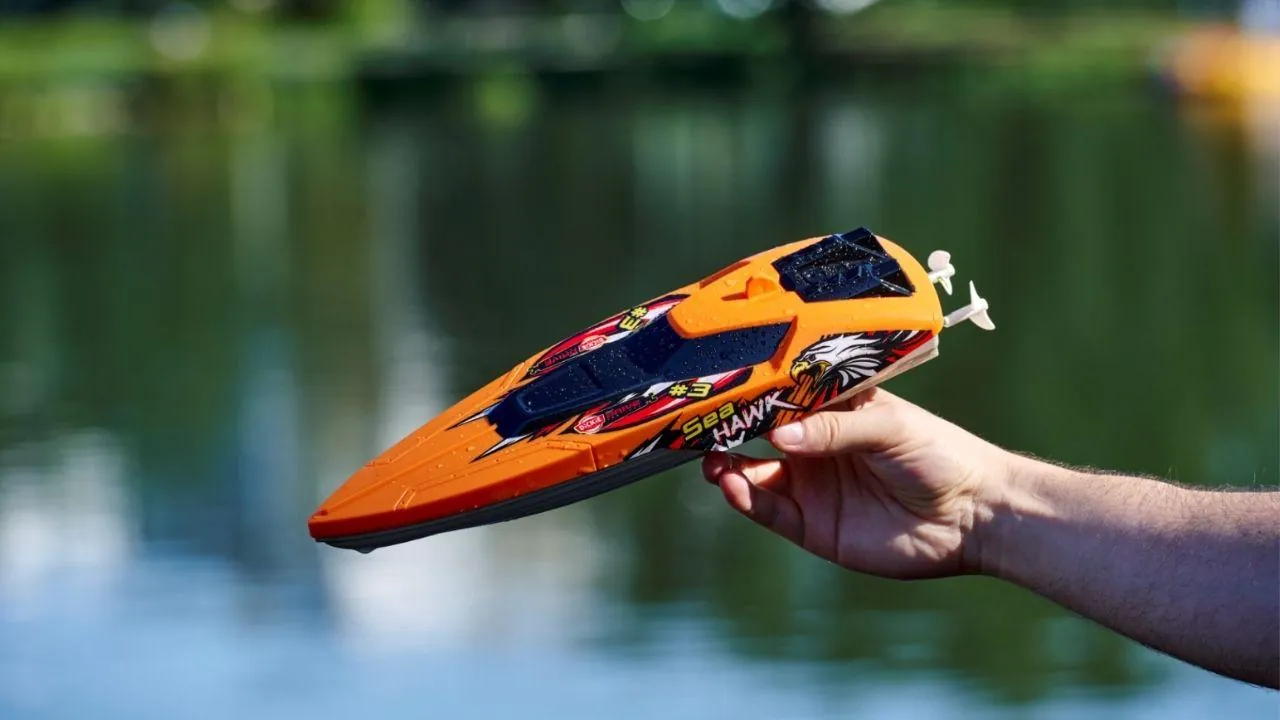
Most issues with radio-controlled watercraft are simple to diagnose by looking at the power source or the communication link. This table helps you narrow down the cause by matching the symptoms to the most probable failure points.
| Cause | How common | How to confirm it | Fix it yourself? |
|---|---|---|---|
| Dead batteries | Very common | Check voltage or charge | Yes |
| Signal interference | Common | Move to open water | Yes |
| Wet receiver | Occasional | Inspect for water inside | Yes with care |
| Corroded terminals | Occasional | Look for white residue | Yes |
| Motor failure | Rare | Listen for grinding sounds | No |
| Broken antenna | Rare | Check for physical damage | No |
If your boat moves sluggishly despite a full charge, check the propeller shaft for tangled fishing line or weeds. A single strand of monofilament wrapped around the shaft creates enough drag to overheat the electronic speed controller.
When the boat loses control at a specific distance, your antenna is likely positioned too low inside the hull. Keep the antenna wire vertical and as far above the waterline as possible. If you operate in salt water, expect signal range to drop by nearly forty percent compared to fresh water.
Never ignore white, crusty buildup on battery connectors. This oxidation creates high resistance that melts plastic housings. Use a small wire brush or a specialized contact cleaner to remove the corrosion. If the receiver box feels damp, leave it open in a dry room for twenty-four hours. Don’t use a hair dryer, as the heat can warp delicate internal circuits.
Empty or damaged battery packs
Power depletion is the primary cause of a boat that fails to respond even when the controller is on. Most lithium-polymer or nickel-metal hydride batteries used in these toys have a limited lifespan and will eventually stop holding a charge. You can confirm this by using a battery tester or simply observing if the boat’s internal lights or motor hum fail to activate after a full charging cycle.
If the battery is the culprit, replace it with an identical unit recommended by the manufacturer. Using a battery with the wrong voltage can damage the internal electronics or cause a fire hazard. If the battery is swollen or leaking, don’t charge it; dispose of it according to your local waste management guidelines.
Signal loss and frequency mismatch
If your batteries are charged but the boat remains unresponsive, the signal between the transmitter and the receiver might be blocked. This often happens if you’re operating near large metal structures, power lines, or other radio-controlled devices that use the same frequency. If you’re using a 2.4GHz system, ensure that the controller and the boat are correctly “bound” or paired according to the manual.
To test this, move your boat and controller to a wide-open area away from obstacles. If the boat begins to respond, the issue was external interference. If it still doesn’t move, the internal receiver may have lost its connection to the transmitter. Try the binding process again by following the specific sequence of turning on the controller and boat, which is usually documented on the product’s official website or in the included manual.
Many operators mistakenly assume the receiver is dead when a simple re-bind fixes the issue. If the status light on your receiver flashes red instead of turning solid green, the system has lost its unique handshake protocol. If you have multiple models, ensure you aren’t accidentally trying to control the wrong boat on a shared frequency.
Damaged electrical contacts
Corrosion on the battery terminals prevents electricity from flowing, even if the battery itself is fully charged. This often occurs if the boat has been stored in a damp environment or if water has leaked into the battery compartment. You can identify this by looking for a white or green powdery substance on the metal springs or contacts inside the battery bay.
If you find corrosion, use a dry cotton swab to gently wipe away the residue. For stubborn deposits, dip the swab in a solution of one part baking soda to two parts water. Wipe the area clean with a dry cloth immediately after to prevent further oxidation.
If the metal is severely pitted or rusted, the electrical contact will be poor, and the boat may only work intermittently. You can sometimes improve the connection by slightly bending the contact springs to ensure they press firmly against the battery.
If the metal is broken or the plastic housing is cracked, the unit is likely beyond a simple home repair. Replace the entire battery tray if the rust has migrated to the internal wiring, as this creates a fire hazard.
Rare mechanical and hardware failures
Water inside the hull can short-circuit the sensitive electronic speed controller, so check for any moisture accumulation after every use. If you find even a single drop, dry the interior thoroughly with a microfiber cloth before the next launch to prevent permanent corrosion.
The propeller shaft may be jammed by weeds or fishing line. Check this by gently rotating the propeller with your fingers while the power is off. If you feel gritty resistance or a hard stop, don’t force it. Instead, use needle-nose pliers to extract the debris, as forcing the shaft can bend the delicate motor housing.
If the boat loses top-end speed or stutters during acceleration, the brushes are likely spent. This requires a professional to replace.
If the internal antenna wire is pinched or severed, the range drops to almost zero. If your signal cuts out within ten feet of the shore, inspect the antenna lead for kinks.
What a repair usually requires
Fixing a remote control boat typically requires basic tools like a small screwdriver or a cotton swab for cleaning contacts. If the issue is a dead battery, the cost is roughly the price of a new toy accessory, which is much cheaper than replacing the entire boat. If you need a new receiver or motor, the cost depends on the model’s availability and whether you can find the specific spare part from the maker.
Always check the manufacturer’s website for a list of compatible parts before you buy anything. If a repair requires soldering or opening the sealed electronic housing, the cost of professional labor can quickly exceed the value of the boat. If you aren’t confident in your ability to perform these tasks, contact the manufacturer’s support team or a local hobby shop to get a quote for a professional inspection.
Frequently asked questions
How long does a standard battery charge last?
A standard charge usually lasts 15 to 30 minutes, depending on the battery capacity and how aggressively you use the motor. If your boat runs for significantly less time, the battery may be nearing the end of its cycle life. Check the manufacturer’s manual for the expected runtime for your specific model, as larger boats with more powerful motors will drain energy faster than smaller versions.
Is it safe to use the boat in saltwater?
It isn’t safe to use standard remote control boats in saltwater because the salt causes rapid corrosion on the metal parts. If you do use the boat in salt water, you must rinse the hull and all metal components with fresh water immediately after use. Even with rinsing, saltwater will eventually damage the internal electronics, which is why most manufacturers recommend only using these boats in fresh water.
Why does the boat stop working when it gets far away?
The boat stops working because it has moved out of the effective range of your controller’s radio signal. This range is determined by the transmitter’s power and the presence of physical interference between you and the craft. If your boat consistently loses control at the same distance, try replacing the batteries in your controller first, as weak transmitter power is a common reason for a reduced range.
What happens if water gets inside the hull?
Water inside the hull causes an electrical short that can permanently damage the receiver and the motor. If you see water inside, you should immediately remove the batteries and let the unit dry out completely in a well-ventilated area for at least 24 hours. Don’t turn the power on while the interior is damp, as this can cause a fire or further damage the internal circuit boards.
Does it matter if I use a different charger?
It matters a great deal, as using the wrong charger can cause a fire or destroy the battery pack. You must use the charger that came with the boat or an official replacement that matches the voltage and amperage requirements exactly. Using a charger with the wrong specifications is a common mistake that often leads to the total failure of the battery and the boat’s main electronics.
Can I fix a broken antenna myself?
You can’t fix a broken antenna yourself if it’s soldered to the internal circuit board, as this requires specialized tools and technical training. Attempting to solder the wire yourself can void your warranty and risks damaging the delicate receiver. If the external antenna is just a plastic tube, you can usually buy a replacement tube, but a damaged internal wire requires professional help or a complete receiver replacement.
How do I know if the motor is burned out?
Your motor is likely burned out if you hear grinding, smell burning plastic, or the propeller fails to turn with fresh batteries. You can test the motor by applying direct power, but this requires electronics experience. If you’re a beginner, take the boat to a local hobby shop for a professional diagnosis.
Conclusion
Regular maintenance is the best way to keep your boat running smoothly. Always dry the hull after every trip and store your batteries in a cool, dry place to ensure they stay ready for the next time you head to the water.