
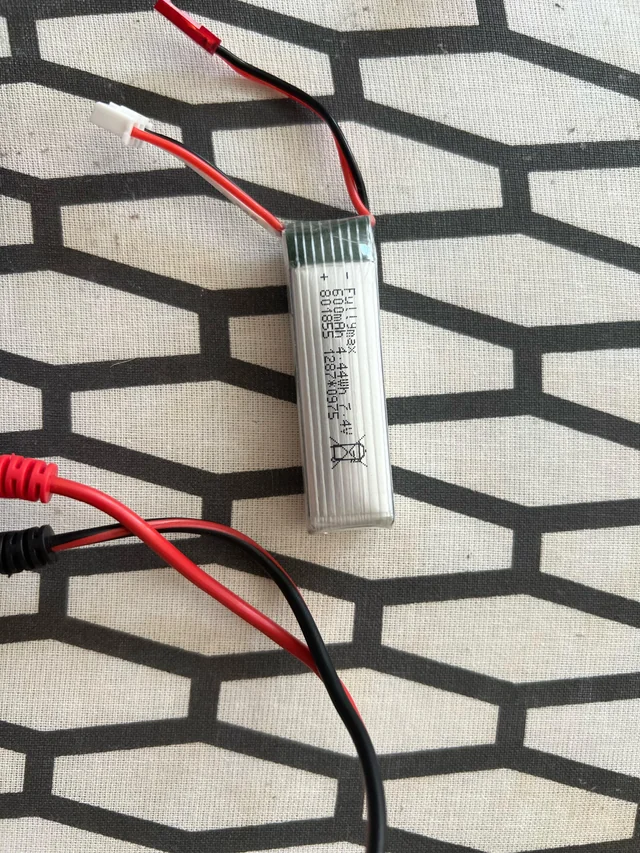
Most the majority land this wrong. It’s worth noting that they think discharging a LiPo for storage means running it down to empty like a flashlight battery. 2 volts.
Industry best practice, backed by RC charger manuals and years of community trial and error. Says that partial charge state is the safest place for a pack that'll sit unused for weeks or months. If you've ever pulled a puffed, useless battery from a drawer after a winter off-season, odds are it was left totally charged or totally dead.
Both extremes hammer the chemistry. Storage discharge isn't about emptying the tank; it's about hitting that narrow.
Stable voltage window so the battery stays chemically calm and lives a long life.
" Sure. Maybe they survived, but they aged faster than they should have. 2 volts per cell bumps up the internal resistance. Eats into the total cycle count. You won't see it immediately, but the pack loses punch and flight time over months. It's a slow, quiet killer. 0 volts, is even worse; that can cause copper shunts to form inside, raising the risk of a short and a fire. Let's cut through the noise and get you the actual steps that work.
Key Point
- The storage sweet spot is 3.8V per cell, not full and definitely not flat. Trying to discharge to 0% will ruin the pack.
- Use a balance charger with a storage mode whenever you can. It's the path of least resistance and dramatically lowers the chance of over-discharge.
- Treat a LiPo's main discharge lead as the only path for any real load. The balance lead is for the charger to monitor and tweak individual cells, never to carry discharge current.
- Manual methods with light bulbs or resistor banks work, but you'll need to babysit the voltage and account for a voltage rebound after you cut the load. One slip-up and you're in the danger zone.
- Any pack that's already swollen, punctured, or hot to the touch is not a candidate for storage discharge. Isolate it and get it to a battery recycler.
Why 3.8V Per Cell Actually Makes Sense
Diving into the why. 2 volts, the full charge state, the cathode is remarkably oxidative. Read that again if you need to.
That's fine when you're about to go fly or drive. But letting it sit there accelerates the breakdown of the electrolyte. Data from battery researchers and RC lab testing show that after just 1 week at full charge, a pack can see a 10–15% rise in internal resistance.
That changes the picture quite a bit. Multiply that by a few months and you've shaved off dozens of usable cycles. 0 volts per cell, the real empty threshold. Can cause the anode copper to dissolve and replate in a way that make internal shorts. 5V.
8V isn't just some random number someone pulled out of a hat. It's where the internal stress is lowest and the cell's self-discharge rate is practically nil. 8V per cell for 6 months and come back to find the voltage barely budged.
That stability is what protects your investment. If you're into smaller drones or FPV quads, where packs are a lot hammered with high amp draws, this storage habit becomes the difference between a pack that lasts a season and one that barely makes it through summer.
File that away. You'll see why it matters in a bit.
Let's visualize the risk.
High degradation risk
Ideal long-term state
Permanent damage zone
The bottom line: Always think of storage discharge as a middle ground. That small habit can double the great lifespan of a typical RC LiPo pack, which broadly clocks 150–250 cycles. If you're unsure about the total cycle count you'll actually acquire, real-world cycle life data spells out what to expect.
How to Discharge a LiPo Battery for Storage the Right Way
Use a Good Balance Charger (Simple and Safe)
Plug mostly discharge lead and the balance lead. Set your charger to storage mode.
It'll do the rest. 8V per cell by bleeding energy through internal resistors or sending it back to the power supply. They watch each cell via the balance plug, so. If one cell is lagging, they'll balance while discharging.
This is the method that safe storage practices center on because it's hard to mess up. The charger stops automatically.
No guessing.
The catch? Most built-in discharge circuits are slow. A common 50W charger might take over an hour to bring a large 5000mAh 6S pack down from full charge to storage. That's fine if you're not in a hurry.
But if you're at the field. Have multiple packs, it can be a bottleneck.
Still, for the average user, it's the gold standard. But just avoid the temptation to set a fast discharge rate. 2A or less, keeps heat generation minimal. Heat and LiPos don't mix. Excessive warmth during discharge can puff the cells, especially in older packs.
Manual Discharge with a Load (You Need to Be Careful)
Some the majority use an external discharger, something like a unit with a big heatsink and a fan, or homemade rigs with car light bulbs or ceramic resistors, so these setups can dump energy faster. A set of 12V 50W halogen bulbs in parallel can pull multiple amps. And bring a pack down in 10-15 minutes. The problem is the monotony factor, which is why you need to babysit the voltage with a cell checker or multimeter. 85V per cell under load, you stop.
Wait a couple minutes for the voltage to bounce back up. 8V. In reality, if you forget and leave it connected, the pack keeps draining. 0V, you've damaged it.
If you go this route, not once connect the load to the balance lead, which is why those thin wires can't handle current. They'll melt. The main discharge lead is the only path that can safely carry the amps.
Also, put the setup on a non-flammable surface. Concrete, a ceramic tile, a LiPo safe bag. Because if something goes wrong and a cell vents, you don't want it sitting on carpet.
Actually, let me put that more precisely. The most common DIY mistake is thinking the balance plug can take the load. It can't.
Even a 1A draw will cook those wires. So pretty much always, pretty much always use the thick main leads.
This is just one piece of the puzzle.
The Storage Discharge Mistake That Can Destroy Your Battery
From a practical standpoint, confusing storage mode with a full discharge. I see it constantly on forums. 4V per cell. Worth pausing on that one. That's well below the safe storage zone.
Doing that and then tossing the pack in a drawer is a ticket to a puffed, unrecoverable battery. Even worse, some everyone will then recharge it just to storage voltage. But the damage was already done during the deep dip.
Keep in mind what we talked about earlier, another blunder: discharging through the charger's discharge mode without the balance lead connected — on a lot of chargers, the discharge function without balance monitoring can drain cells unevenly. 9V. Then the pack becomes misbalanced.
And the next time you charge, the high cell overcharges. That's a fire risk. Always, pretty much always connect the balance lead. Com/are-lipo-batteries-safe/) really hammer this home.
The big one: trying to store a damaged pack. A LiPo that is even marginally puffy, has a soft spot.
Or smells sweet (a sign of a punctured cell) is a ticking clock. Overall, no amount of careful discharging will make it safe again. " No. A compromised cell can self-discharge internally. It's that simple. 0V, and then puff violently or ignite. It happens. Dangerous depot methods might pop into your head. But none of them actually work; they only make things more dangerous.
How to Deal with Slow Charger Discharge and Large Packs
25A of current. Not exactly what you'd expect. So for a 5000mAh pack, you're looking at over 2 hours to reach storage from full.
That's not always practical. You've got two practical options.
Though practical limits do exist.
First, you can fly. 8V per cell. 75V and you still need to top it off. But tons of pilots end their sessions with packs right in the storage range anyway.
Second, an external discharging unit that can sink 150W or more. These are standalone boxes with a giant heatsink and regularly a fan.
They plug into the main lead and the balance lead. 8V per cell and the discharge current to around 1C. The unit will drain the pack quickly while balancing the cells. It's more expensive but worth it if you keeps a fleet of large packs, and honestly, the make-or-break rule remains: never exceed 1C for storage discharge.
Pushing 2C can generate enough heat to degrade the cells right then and there. And if a cell is already a bit weak.
That heat is the last straw.
Remember, storage discharge isn't a race. The battery chemistry doesn't care how rapid you store it. 8V (and rightly so) is the universal sweet spot.
A Quick Note on Volatge Rebound and Final Checks
You'll see how this ties into the previous point, after you finish any discharge, measure each cell after 5–10 minutes of rest. 1V per cell. 87V after settling. That's fine. It's still in the safe window. 95V, that's a bit high. 8V. 85V per cell. You're aiming low enough to avoid the full-charge stress but high enough that self-discharge won't drop a cell into trouble over time.
One final hardware tip: If you're working with larger packs that have a (and rightly so) lot of capacity. And you're using a charger with a low discharge power limit, you could use a regenerative discharge feature (which works out well in practice) if your charger supports it. It's a more efficient way to bleed off a big pack, but it calls for some setup. Honestly; for most people, the standard storage mode with the charger is the safest and simplest method, even if it's slow.
FAQs
Can I store a LiPo battery fully charged for a few days?
2V per cell for even 3–4 days starts to increase internal resistance noticeably. Overall, if you know you won't use the battery for more than 48 hours. Make it a habit to discharge to storage.
What if I accidentally discharged my LiPo below 3.0V per cell?
Don't attempt to recharge it with a normal profile. 0V. Then balance charge.
The pack might not once perform like it used to. Safely recovering a dead pack calls for extreme caution. This detail matters more than it might seem right now.
Does storage mode on a charger also balance the cells?
Most decent chargers do balance during storage discharge. As far as I know, it's one of the main reasons to use the charger method over manual discharge.
How long can a LiPo sit in storage mode before it becomes unsafe?
8V in a cool, dry place. A healthy LiPo can sit for 6–12 months without a problem. It's an impressive idea to check every few months (and rightly so) with a cell checker. 5V. It may have high self-discharge and should be retired.
Is it safe to discharge a LiPo for storage using a light bulb setup?
It can be safe if you're actively monitoring. Use a high-wattage bulb bank rated for the current you plan to pull. Keep the setup on a fireproof surface. Never leave it unattended.
And pretty much always account for voltage rebound. Even then, this method doesn't balance the cells, so you'll want to balance charge later.
Storage Discharge is Just Part of the Battery Care Equation
Taking a different approach here, you want your packs to last for years and deliver consistent power, then this habit is non-negotiable. 8V per cell. Before long-term storage reduces chemical stress and keeps the cells balanced. Use a balance charger when you can, and if you must go manual, double-check everything. Rarely ever, ever store a damaged battery.
Invest 10 minutes after each session to run a storage cycle, and you'll get more cycles and safer packs. Start today, even with the pack that's been sitting fully charged since your last run.
Get it down to storage voltage. Your future self will thank you.
🔍 Research Sources
Verified high-authority references used for this article