The best ESCs for no-prep RC drag racing deliver smooth launches, clean power, and cool temps.
You line up at the tree. The surface is dusty. Your tires are warm, but not sticky. The whole race will be won or lost in the first 10 feet. I’ve been there, trying to tame wheelspin and throttle blips with a sketchy ESC. The right speed controller changes that story. It gives you precise launch control, predictable throttle, and heat management that survives back-to-back passes. In this guide, I break down the best esc for no prep rc drag racing for different scales, budgets, and goals—so you can spend more time dialing in your car and less time fighting electronics.

Spektrum Firma 100A Brushless Smart…
Motor and ESC Combo: Easy completion item for RC Drag Racers Geared for Competition: Specifically sourced for Stock Class and Pro Class 2S Drag Cars Program via Transmitter: Proprietary Text…

DKKY RC Brushed ESC 40A,…
Designed for smoother and more precise driving, perfect for navigating challenging terrains. Support 2-3S LIPO or 4-9 NIMH batteries 6-12.4V. High effect output 40A, compatible with 030 050 130 180…

DKKY RC Brushed ESC 40A,…
Designed for smoother and more precise driving, perfect for navigating challenging terrains. Support 2-3S LIPO or 4-9 NIMH batteries 6-12.4V.High effect output 40A, compatible with 030 050 130 180 380…
Spektrum Firma 100A Smart ESC + 6500Kv Combo

This Spektrum Firma 100A combo pairs a 100A Smart ESC with a 6500Kv brushless motor. It’s built for strong street power and clean telemetry with Spektrum radios. The ESC’s Smart tech can report temps, voltage, and more when used with a compatible receiver. That feedback helps you tune gearing and throttle for repeated no-prep passes.
For no-prep RC drag, this combo delivers a sharp, linear feel. It’s a sensorless system, so the very first inch of launch can feel edgy if you push aggressive gearing. You can tame that with punch control, throttle curves at the radio, and smart gearing. It’s a solid path if you want a reliable brand and an easy drop-in that still pulls hard.
Pros:
- 100A rating supports stout 2–3S power on light 1/10 builds
- Smart telemetry aids heat and voltage management between passes
- Smooth throttle feel for street-style launches with careful setup
- Spektrum ecosystem support and easy binding for RTR conversions
- Combo value: motor and ESC matched from the factory
Cons:
- Sensorless cog can appear at the first inch of launch
- Not a drag-specific ESC with detailed ramp/boost profiles
- Can run warm on tall gearing or heavy tires without airflow
My Recommendation
If you want a trusted brand and a clean install, this is a strong pick. It is not a full-on drag race ESC with advanced ramp maps, but it’s predictable and tough. Keep the gearing safe, add throttle expo, and you can get repeatable hits. For many new racers, this combo can be the best esc for no prep rc drag racing at a starter-to-intermediate level thanks to its Smart data and simple setup.
| Best for | Why |
|---|---|
| Budget street-to-drag build | Combo pricing and easy install |
| Telemetry-focused tuning | Smart data for temps and voltage |
| Reliable 2–3S passes | 100A capacity and stable throttle |
DKKY 40A Brushed ESC for 1/16–1/24 Crawlers
 crawlers“>
This DKKY 40A brushed ESC is aimed at small crawlers and micro builds. It suits 1/24 to 1/16 scale brushed motors that draw modest current. If you run a tiny no-prep drag class at home or at a club, a brushed micro can be a blast. The small size helps it fit in tight chassis.
Is it the best esc for no prep rc drag racing at 1/10? No. But for micro brushed classes or backyard test beds, it’s a simple, low-cost way to learn launch setup. You can practice throttle discipline and gearing changes on a small course. Then move those lessons to a larger brushless setup later.
Pros:
- Affordable entry for micro drag or small-scale builds
- Compact form factor fits tight chassis
- Easy wiring and basic setup
- Sufficient 40A rating for small brushed motors
- Good for practice and learning launch control
Cons:
- Not for 1/10 brushless drag racing power levels
- Brushed feel lacks the punch and control of sensored brushless
- Limited tuning compared to race ESCs
My Recommendation
If you enjoy micro-scale racing, this DKKY unit is a fine pick. It lets you run light cars, test tire prep, and practice starts on a small budget. It is not the best esc for no prep rc drag racing in standard 1/10 classes, but it’s a smart stepping stone for skills. I like it for families, beginners, and tight spaces.
| Best for | Why |
|---|---|
| Micro drag practice | Low cost and simple setup |
| Small chassis builds | Compact size and modest wiring |
| Learning throttle control | Gentle power teaches smooth launches |
DKKY 40A Brushed ESC (Alt Package)

This is a similar 40A brushed ESC from DKKY that targets the same micro range. Think of it as a spare or a version with slightly different connectors or packaging. It’s handy when you want matching behavior across two micro cars. Consistency helps when you test gearing or tires back to back.
Like the other DKKY, it’s not a 1/10 powerhouse. Still, for tiny no-prep fun on a short track, it keeps the cost low and the tinkering simple. If a young racer wants to learn, this is a friendly start. You can always upgrade to the best esc for no prep rc drag racing in brushless form later.
Pros:
- Good value for small brushed builds
- Simple to mount and wire
- Predictable throttle feel for kids and new racers
- Works as a backup ESC for micro fleets
- Lets you test gearing and tires on a budget
Cons:
- Not a match for 1/10 drag classes
- Limited tuning and telemetry
- Brushed only—no sensored brushless support
My Recommendation
Grab this if you build a second micro car or want a spare. It is a steady, low-risk way to test launch surfaces and tire prep at home. While it’s not the best esc for no prep rc drag racing at full scale, it gives new drivers a safe place to grow. Later, step up to a sensored brushless race ESC.
| Best for | Why |
|---|---|
| Backup micro ESC | Matches behavior across multiple cars |
| Beginner training | Forgiving throttle and low speed |
| Budget tuning | Cheap way to test gearing and tires |
GOUPRC 60A Brushless ESC 2–3S Waterproof

This GOUPRC 60A ESC is a budget brushless unit for 2–3S use. The waterproof claim makes it a decent option for bashing and wet parking lots. For drag beginners, it offers a low entry cost to try brushless power. It’s compact and fits many 1/10 chassis.
For no-prep, 60A can work on mild gearing and light tires. It’s sensorless, so tune your punch and throttle end-points to keep the launch smooth. If you pair it with the matching program card, setup gets faster. It is not a pro drag piece, but it’s a fair start on a tight budget.
Pros:
- Affordable 2–3S brushless power
- Waterproof rating helps with all-weather use
- Compact for tight builds
- Beginner-friendly entry into brushless tuning
- Works with a program card for easier changes
Cons:
- Sensorless—launch can be jumpy if punch is high
- 60A limit may thermal on heavy gearing or big tires
- No advanced drag race profiles or logs
My Recommendation
I like this as a starter brushless ESC for practice nights. Keep the weight low, tires small, and gearing safe. Use the program card to tame punch. It won’t beat the best esc for no prep rc drag racing in a deep field, but it can teach you how to stage, launch, and read a pass without breaking the bank.
| Best for | Why |
|---|---|
| Budget 1/10 brushless build | Low cost and simple setup |
| Wet parking lot practice | Waterproof rating helps in drizzle |
| Learning ESC programming | Works with program card for quick tweaks |
FLY RC 30A Brushless ESC for Airplane/Heli

This FLY RC 30A ESC is made for aircraft and multirotors. It’s lightweight and focused on smooth throttle for props. While that’s great in the air, car racing needs different features. Ground ESCs favor specific braking and drive profiles.
Could you adapt it for a micro car experiment? Maybe, with skill and care. But I don’t recommend it for no-prep. It’s not built with car firmware or reverse behavior in mind. For drag, stick to car-focused controllers to chase the best esc for no prep rc drag racing standards.
Pros:
- Very light for small power setups
- Clean throttle for props and rotors
- Simple wiring and compact size
- Budget-friendly for flyers
- Good for RC electronics tinkerers
Cons:
- Not a car ESC; lacks ground-focused features
- 30A is too small for most drag builds
- Reverse and braking behavior not car-optimized
My Recommendation
Use this where it belongs: planes and helis. If you race no-prep, favor a car ESC with launch control, better brake logic, and heat handling for hard pulls. To reach the best esc for no prep rc drag racing level, you need a dedicated car unit with tuning support and drive profiles.
| Best for | Why |
|---|---|
| RC airplanes | Smooth throttle for prop-driven craft |
| Helicopters and multirotors | Lightweight and simple control |
| Tinker projects | Good for learning ESC basics |
GOUPRC ESC Program Card (1/10 Car)

This GOUPRC program card is a small tool that speeds up ESC tuning. Instead of guessing at beeps and blinks, you set values on a simple interface. For no-prep racing, that matters. Tiny changes in punch, timing, or brake can make or break a pass.
Use it with compatible GOUPRC brushless ESCs. It’s not a speed controller by itself, but it helps you reach repeatable setups fast. If you chase the best esc for no prep rc drag racing results, tools like this save time and reduce errors. Portable, simple, and cost-effective.
Pros:
- Fast, repeatable ESC changes at the track
- Reduces setup errors from beep-based menus
- Portable and easy to read
- Great for beginners learning tuning basics
- Helps standardize team or family setups
Cons:
- Only works with compatible GOUPRC ESCs
- Not a performance upgrade by itself
- May not support advanced race parameters
My Recommendation
If you own a compatible GOUPRC ESC, get the card. It cuts setup time and helps you focus on the run. Even if it’s not the best esc for no prep rc drag racing, it supports your ESC in becoming its best. I like pairing it with the GOUPRC 60A for quick learning sessions.
| Best for | Why |
|---|---|
| Fast trackside tuning | Simple interface beats beep menus |
| New racers | Learn settings without confusion |
| Consistent setups | Match values across multiple cars |
GOUPRC 30A Brushless ESC for SCX24

This GOUPRC 30A ESC targets the SCX24 crowd who want brushless response. It’s small and light for micro chassis. If your local club runs mini no-prep classes on office-floor tiles, this can be fun. Pair it with a suitable micro brushless motor.
In 1/10 racing, this won’t cut it. But as a tiny test bed, it teaches throttle finesse and launch timing. You can try tire prep tricks and practice consistent staging. While it’s not the best esc for no prep rc drag racing in big classes, it’s great for small rooms and rainy days.
Pros:
- Micro size for SCX24 and small builds
- Brushless punch in a tiny package
- Light weight helps micro drag launches
- Budget-friendly path to brushless
- Great for practice at home
Cons:
- Not designed for 1/10 drag power demands
- Limited drag-specific tuning
- Requires careful motor pairing and gearing
My Recommendation
Choose this if you live in the micro world. It’s a fun way to enjoy no-prep vibes in tight spaces. You can train your eyes and thumbs before stepping up. For chasing the best esc for no prep rc drag racing at 1/10, use this as a practice tool, not your main unit.
| Best for | Why |
|---|---|
| SCX24 brushless upgrades | Tiny size and light weight |
| Indoor micro drag | Low power, easy to control |
| Budget brushless test bed | Affordable micro experimentation |
Flash Hobby 7A BLHeli_S ESC (2–3S)
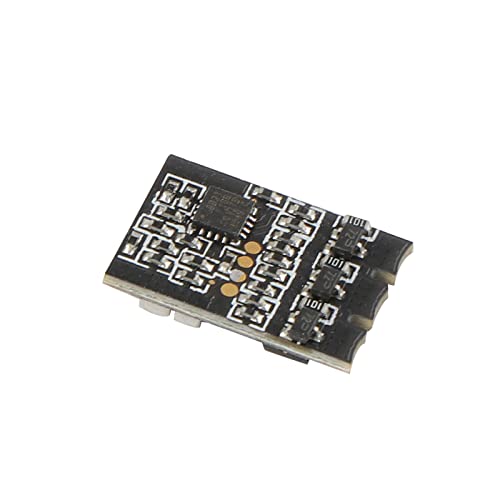
This Flash Hobby 7A ESC is a BLHeli_S unit for FPV drones. It’s tiny, light, and made for high-RPM motors. It can run on 2–3S with small prop setups. It is not a car ESC and lacks car-focused features.
For cars, there’s no reverse and no car brake logic. It also often needs a flight controller for clean input. As a result, it doesn’t suit no-prep racing. The best esc for no prep rc drag racing should be a ground unit with launch tools and thermal design for straight-line hits.
Pros:
- Ultra-light and compact for drones
- BLHeli_S firmware with high motor response
- Low cost for FPV projects
- Good for electronics learning
- Works for tiny RC experiments with expertise
Cons:
- Not a car ESC; no reverse or car brake logic
- Very low current for drag applications
- Often requires flight controller integration
My Recommendation
Use it for FPV. For no-prep, choose a car-based ESC. You want strong BEC support, thermal margin, and launch control that suits rubber on asphalt. That is how you chase the best esc for no prep rc drag racing and avoid headaches on race day.
| Best for | Why |
|---|---|
| FPV drone builds | Lightweight with BLHeli_S response |
| Electronics practice | Simple and low-risk learning piece |
| Tiny experiments | Fits tight spaces with low draw |
FAQs Of best esc for no prep rc drag racing
What makes an ESC good for no-prep drag racing?
Clean launches, heat management, and predictable throttle. Sensored brushless control and tunable punch help you hook on sketchy surfaces.
Do I need a sensored ESC for no-prep?
It helps a lot. Sensored starts are smoother, which matters when traction is low. Many top racers prefer sensored systems.
How many amps should my drag ESC handle?
In 1/10 racing, 100A class is a strong baseline for reliability. More current headroom gives cooler temps and repeatable passes.
Is telemetry useful for drag racing?
Yes. Temps and voltage data guide gearing and timing. Telemetry makes it easier to repeat runs without cooking parts.
Can I race with a sensorless ESC?
You can. Tame punch and use soft launch curves. It’s harder to perfect the first foot, but practice and gearing help.
Final Verdict: Which Should You Buy?
If you want a simple, proven path, the Spektrum Firma 100A combo is the most race-ready pick in this list. It pairs strong current capacity with Smart data, which helps tune for repeat passes and safer temps.
Chasing the best esc for no prep rc drag racing long-term? Move toward sensored, drag-focused car ESCs with detailed launch tuning. Use budget options here for practice, backups, or micro fun while you refine your craft.