
The best hip seat for baby combines strong support, easy adjustment, safe positioning, and comfort for daily carrying.
Holding a baby can feel easy at first, but tired arms and a sore back soon change the picture. A hip seat can spread your child’s weight across your waist and hips. It can also make short trips, home chores, and quick comfort much easier. I reviewed four popular options with different designs and use cases. I focused on seat support, belt comfort, storage, carrying choices, weight range, and value. I also considered how each model may fit real family routines. Always follow the maker’s instructions and your baby’s age, weight, and development needs.
See the differences between my top picks at a glance.
| Hip seat | Weight range | Main design | Best for | Buy |
|---|---|---|---|---|
| Tushbaby Original Grey | Up to 45 lb | Standalone no-foam seat | Fast, one-arm carrying | View on Amazon |
| Tushbaby Original Black & Gold | Up to 45 lb | Standalone no-foam seat | Style and daily convenience | View on Amazon |
| Momcozy Hip Seat | Up to 45 lb | Adjustable, widened seat and belt | Back support and pockets | View on Amazon |
| MOMTORY 6-in-1 Carrier | 7–50 lb | Carrier with hip seat | More carry positions | View on Amazon |
Tushbaby Original Hip Seat in Grey

The Tushbaby Original is a simple hip seat for parents who want quick access to their child. Its listed design uses a lightweight, no-foam seat and includes storage. The product is rated for babies and toddlers up to 45 pounds, according to the supplied product details. The gray color looks neutral and works well for everyday use.
I see this style as a strong choice for short carries, feeds, errands, and trips around the house. It does not aim to replace a full structured carrier in every situation. Instead, it gives a child a place to sit while the adult supports the upper body with one arm. The waist belt must sit firmly and the child must remain in a safe position at all times.
Pros:
- Lightweight design may feel less bulky than a full carrier
- Up to 45-pound listed capacity suits many baby and toddler stages
- Storage helps keep small items close during short trips
- Open hip-seat format allows fast in-and-out use
- Neutral gray color fits many personal styles
- No-foam construction may appeal to parents who prefer a simple seat
Cons:
- A standalone hip seat does not provide the same hands-free support as a full carrier
- The adult may still need to support the child with one or both arms
- The waist belt can feel less comfortable if it is not adjusted with care
What Amazon Buyers Are Saying
Buyer feedback for this type of Tushbaby seat often centers on convenience. Parents commonly value the quick setup, the reduced need to lift a toddler from the floor, and the small storage areas. Many users also like the freedom to use the seat for brief carries rather than putting on a full carrier each time. These points match the product’s simple, open design.
The main concern in user feedback tends to involve fit and expectations. Some buyers expect a hip seat to offer fully hands-free carrying, but a standalone seat usually needs active support from the adult. Other users may notice pressure around the waist or hips during long use. Fit, child position, and carry time make a large difference, so I would read the current Amazon reviews for your body type before buying.
My Recommendation
I recommend the gray Tushbaby Original for parents who want a fast, light option for home use, short walks, and toddler lifting. It is worth considering when you value access and storage more than hands-free carrying. It may not suit parents who need a full carrier for long walks. My overall rating is 4.4 out of 5.
| Category | Rating |
|---|---|
| Seat design | 4.5/5 |
| Ease of use | 4.6/5 |
| Storage | 4.3/5 |
| Long-use comfort | 4.1/5 |
| Overall rating | 4.4/5 |
Tushbaby Original Hip Seat in Black and Gold
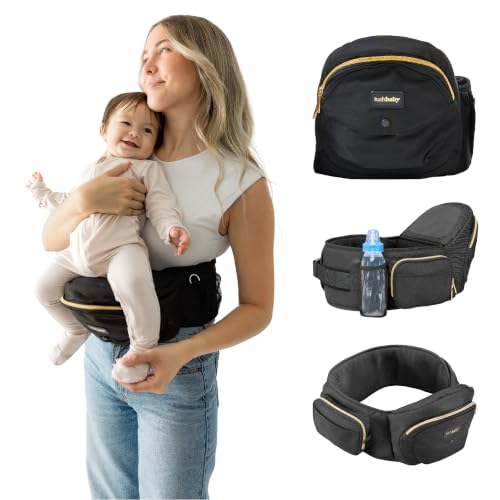
This Black and Gold Tushbaby Original shares the same core product concept as the gray version. It is a lightweight hip seat for babies and toddlers up to the listed 45-pound limit. The design includes storage and uses a no-foam seat format. The main difference shown here is the finish, which gives the carrier a more dressed-up look.
The open seat can work well when a child wants to be picked up often. I like this format for parents who move between carrying, setting a child down, and carrying again. It can also help during feeding or soothing when a parent wants support under the child without wrapping on a full carrier. As with any hip seat, it does not remove the need for close attention and proper child support.
Pros:
- Up to 45-pound listed capacity covers baby and toddler use
- Black and gold finish offers a polished appearance
- Lightweight build is easy to keep near the door or in a diaper bag
- Storage gives parents a place for small daily items
- Open seat makes frequent pick-up routines faster
- Simple design has fewer parts to learn than a multi-position carrier
Cons:
- The open seat is not a complete hands-free carrier by itself
- Long carrying sessions may place pressure on the wearer’s waist
- Dark decorative details may show wear more clearly over time
What Amazon Buyers Are Saying
Common buyer themes for the Tushbaby Original focus on ease and speed. Parents often discuss how useful the seat feels when a baby or toddler wants repeated up-and-down attention. The storage areas also receive interest because they can reduce the need for a separate small bag during brief outings. The black and gold version may appeal to buyers who want function without a plain look.
Feedback can vary based on the wearer’s waist shape, the child’s size, and the length of each carry. Some users may find the seat comfortable for short periods but less ideal for extended walks. Others may expect more back support than a standalone hip seat provides. I suggest checking the current listing for fit details and reading reviews from buyers with a similar child age and daily routine.
My Recommendation
This version is a good pick when you want the Tushbaby format but prefer the Black and Gold finish. I would choose it for quick errands, indoor carrying, and toddlers who ask to be held often. I would choose a full carrier instead for long hands-free walks. My overall rating is 4.4 out of 5.
| Category | Rating |
|---|---|
| Seat design | 4.5/5 |
| Ease of use | 4.6/5 |
| Appearance | 4.5/5 |
| Long-use comfort | 4.1/5 |
| Overall rating | 4.4/5 |
Momcozy Adjustable Hip Seat Carrier

The Momcozy Hip Seat Carrier takes a more adjustable approach. Its supplied product information highlights an adjustable waistband, a widened seat, a widened belt, pockets, and a listed capacity up to 45 pounds. The listing also presents it for use from newborn stage to toddler stage, but parents should confirm the correct setup for a newborn. The black finish gives it a simple, easy-to-match look.
The widened belt may help spread pressure across more of the wearer’s waist. The widened seat may also give a child a stable place to sit when the adult holds the child close. I see the pockets as a useful touch for keys, a phone, or small comfort items. Still, pockets do not replace a diaper bag, and the fit must remain snug without feeling painful.
Pros:
- Adjustable waistband allows more control over the fit
- Widened belt may spread load across the wearer’s waist
- Widened seat offers a broad support area for the child
- Pockets add useful storage for short trips
- Listed capacity reaches up to 45 pounds
- Product information covers newborn-to-toddler use with correct setup
Cons:
- Newborn use requires careful attention to the product instructions and baby’s development
- More adjustment points may take longer to set up than a basic hip seat
- A hip seat alone may not provide full hands-free support
What Amazon Buyers Are Saying
Buyer discussions around adjustable hip seats often focus on belt fit and daily comfort. Parents tend to look for a waist belt that stays in place and a seat that makes lifting less tiring. Pockets also attract positive attention because they make short trips simpler. These features match the main strengths shown in the Momcozy listing.
The most important review detail to check is how the carrier fits your body. A belt that feels comfortable for one parent may feel firm or restrictive for another. Newborn-related comments also need careful reading because a young baby needs more head, neck, and body support than an older sitter. I would give more weight to reviews from buyers who describe their child’s age, size, and carry position.
My Recommendation
I recommend the Momcozy when adjustability and belt coverage matter most. It is a strong option for parents who want pockets and a wider support design in one product. I would not buy it for newborn use without first checking the instructions and confirming the required support. My overall rating is 4.5 out of 5.
| Category | Rating |
|---|---|
| Adjustability | 4.6/5 |
| Waist support | 4.5/5 |
| Storage | 4.5/5 |
| Ease of use | 4.3/5 |
| Overall rating | 4.5/5 |
MOMTORY 6-in-1 Baby Carrier with Hip Seat

The MOMTORY model is the most versatile product in this group. The listing describes it as a safety-certified 6-in-1 baby carrier with six carry positions, an ergonomic hip seat, and a stated range of 7 to 50 pounds. It also describes the carrier as suitable from newborn to toddler stages and as plus-size friendly. This is a more complete carrier system than a standalone hip seat.
The extra panels and carry positions can make this model useful as a child grows. Parents may use a supported position for a younger baby and change the setup later as the child gains control. More options also mean more steps to learn. I would practice at home, check every buckle, and confirm that the child’s face stays clear and the airway remains open.
Pros:
- Six listed carry positions offer strong flexibility
- Stated 7-to-50-pound range covers a broad growth period
- Combines a hip seat with a more complete carrier structure
- May suit parents who want hands-free carrying options
- Product information highlights ergonomic hip support
- Plus-size-friendly design may fit a wider range of wearers
- Safety certification is stated in the supplied product title
Cons:
- More parts and positions can make setup slower
- The carrier may feel warmer and bulkier than a simple hip seat
- Correct adjustment matters more because the design has more components
- Some families may not use all six carry positions
What Amazon Buyers Are Saying
Buyers who choose a multi-position carrier often value its longer useful life. They tend to look for a product that can support different stages, carry styles, and daily tasks. The hip seat can help with a child who wants to face out or be lifted often, while the carrier section can offer more support than an open seat. These are logical reasons to consider the MOMTORY design.
The trade-off is learning time. Customer feedback for multi-function carriers commonly varies around strap adjustment, bulk, heat, and finding the best position. I would not assume that every listed mode suits every child or adult. Follow the manual, check the child’s fit each time, and stop using a position if the baby slumps, the chin presses to the chest, or the seat does not support the hips well.
My Recommendation
I recommend the MOMTORY for parents who want one product that can work across several carrying stages. It is the best choice here for hands-free potential and range of use, but it has the biggest learning curve. Choose it when you will use the carrier often, not only for quick lifts. My overall rating is 4.6 out of 5.
| Category | Rating |
|---|---|
| Carry versatility | 4.7/5 |
| Growth range | 4.7/5 |
| Support potential | 4.6/5 |
| Ease of setup | 4.2/5 |
| Overall rating | 4.6/5 |
How to Choose the Best Hip Seat for Baby
Choosing the best hip seat for baby depends on how you carry, how long you carry, and how much support your child needs. A simple seat can work well for quick lifts. A full carrier with a hip seat may work better for longer walks. Before you buy, compare the fit, safety details, seat shape, belt design, and weight range. A high rating alone does not prove that a carrier will fit your body or your baby.
1. Match the Design to Your Carrying Routine
Start with your daily pattern. Do you pick up your toddler many times at home? Do you need a quick seat for shopping? Or do you want to walk hands-free for a longer time? A standalone hip seat works best for quick access. It lets you place a child on the padded or shaped seat without building a full carrier around the body.
A carrier with a hip seat gives more support and more carrying choices. It can be a better fit for parents who plan longer walks or need both hands free. It can also take more time to put on. Think about the tasks you do most. If you only need support for a few minutes at a time, the simpler design may offer better value.
2. Check Child Fit, Hip Position, and Safety
Check the minimum and maximum weight listed by the maker. Do not use the top weight limit as your only guide. Your child should sit in a stable position, with the seat supporting the bottom and upper legs. The knees should not hang in a strained position. For young babies, the carrier must support the head, neck, and body as the instructions show.
Look for a clear path for the baby’s nose and mouth. Keep the baby high enough to kiss, but do not press the chin down toward the chest. Check buckles, seams, and straps before each use. Never let a child sleep in an unsafe position. A hip seat can reduce arm strain, but it does not replace close supervision.
Newborn use needs special care. A product title may mention newborn use, yet the correct setup may need an insert, a particular panel, or a minimum developmental stage. Read the current manual before using any carrier with a young baby. If you feel unsure, ask a pediatric health professional or a trained babywearing educator to check the fit.
3. Compare Belt Comfort, Storage, and Long-Term Value
The waist belt controls much of the comfort. Look for enough width, secure adjustment, and a closure that stays flat. A belt that slips can make the child feel unstable. A belt that sits too tight can create pressure on your waist. Adjust it while standing, then test the fit with your child in the seat.
Seat shape matters too. A wider seat may spread the child’s weight, while a simple seat may feel less bulky. Storage can help during quick trips, but small pockets have limits. Check whether they fit your phone, keys, or a pacifier. Do not overload them, since extra weight can pull the belt away from your body.
Finally, compare the total value. A standalone Tushbaby or Momcozy seat may suit families who want fast, simple carrying. The MOMTORY may offer more value for parents who want several positions and a longer use period. Consider how often you will use the product. The best hip seat for baby is the one that fits your routine, your child, and your body—not simply the one with the longest feature list.
Final Verdict: Which Should You Buy?
The MOMTORY 6-in-1 is my top overall choice because it combines a hip seat with six listed carry positions and a 7-to-50-pound range. Choose Momcozy if adjustable support and pockets matter most. Choose Tushbaby for quick, simple toddler carrying.
The best hip seat for baby should feel secure, fit your waist, and match your child’s stage. Check the instructions before use, and review current Amazon details before ordering.
FAQs Of best hip seat for baby
What is the best hip seat for baby overall?
The MOMTORY 6-in-1 is the strongest overall choice in this review because it offers a hip seat, six listed carry positions, and a 7-to-50-pound range. The best choice for you may differ based on fit and routine.
Are hip seats safe for newborn babies?
Some products list newborn use, but newborns need strong head, neck, and body support. Follow the exact product instructions and use only the approved position. Do not use a hip seat if your baby cannot fit safely and stay supported.
Can a hip seat replace a baby carrier?
A standalone hip seat does not always provide hands-free support. It works well for short carries and frequent lifting. A full carrier with a hip seat offers more support for longer walks.
What baby weight can these hip seats hold?
The Tushbaby and Momcozy listings shown here state limits up to 45 pounds. The MOMTORY listing states 7 to 50 pounds. Always follow the current product label and instructions.
Does a hip seat help with back pain?
A hip seat may reduce arm strain and spread some of the child’s weight across the waist. It cannot prevent pain for every wearer. Stop using it if you feel sharp pain, numbness, or unusual pressure.