
The best fanny pack seat for baby combines hip support, a wide seat, secure fit, and easy storage for daily outings.
Picture a toddler asking to be carried just as your arms start to ache. A normal backpack carrier may feel too warm, while a soft sling may not give enough hip support. A fanny pack-style baby seat can solve that problem by giving your child a stable place to sit while you keep both hands more available. I reviewed three popular hip seat carriers to compare comfort, fit, storage, weight range, and daily value. Always follow the product manual and check current safety guidance before use.
See the differences between my top picks at a glance.
| Product | Listed weight range | Standout feature | Storage | Best for | Buy |
|---|---|---|---|---|---|
| Momcozy Hip Seat Carrier | Babies to toddlers, up to 45 lb | Adjustable waistband and widened seat | Pockets listed | Parents who want added back support | View on Amazon |
| Tushbaby Original, Black & Gold | Babies and toddlers, up to 45 lb | Lightweight no-foam design | Storage included | Frequent lifts and short carries | View on Amazon |
| Tushbaby Original, Grey | Babies and toddlers, up to 45 lb | Same Original hip seat design | Storage included | Neutral style and hands-on carrying | View on Amazon |
Momcozy Hip Seat Carrier

The Momcozy Hip Seat Carrier stands out for its adjustable waistband and widened seat design. The product listing presents it for babies through toddlers up to 45 pounds. That range gives it useful room for a child who still wants frequent lifts but no longer needs a full carrier for every trip. The black color also gives it a simple look that fits most daily outfits.
I like the focus on a wider belt and added back support. A broad waistband can spread pressure over more of your waist than a narrow strap. The seat can also help keep a child at a comfortable height during short carries. Still, this is a hip seat, not a hands-free carrier by itself, so I would keep one hand on the child and follow the manual at all times.
Pros:
- Adjustable waistband helps parents tune the fit.
- Widened seat may give better support than a small, flat pouch.
- Listed weight capacity reaches up to 45 pounds.
- Widened belt design aims to improve back comfort.
- Built-in pockets add useful space for small items.
- Portable shape works well for quick lifts and short walks.
- Black color looks simple and easy to match.
Cons:
- A hip seat does not offer the same hands-free support as a full carrier.
- The wider waist design may feel bulky on smaller adults.
- A child may still need steady support while sitting on the seat.
What Amazon Buyers Are Saying
Customer feedback for hip seat carriers often centers on reduced arm strain during repeated lifts. Buyers tend to value a firm sitting platform, useful pockets, and a waistband that stays in place. These features matter during errands, travel, and walks where a child wants to go up and down many times.
The main concern with this type of product is fit. Some parents may find that any waist carrier feels more comfortable after they adjust the belt and position the child correctly. Others may prefer a full carrier for longer wear or when they need both hands free. Before buying, I suggest checking the latest Amazon reviews for your body size, child age, and intended use.
My Recommendation
I recommend the Momcozy for parents who want a fanny pack-style baby seat with a broad fit and added storage. It looks especially useful for toddlers who often ask to be carried for a few minutes at a time. I would not use it as a substitute for a full carrier, stroller, or child restraint. Based on its listed design and features, it is a strong choice for quick daily carrying.
Tushbaby Original Hip Seat, Black & Gold
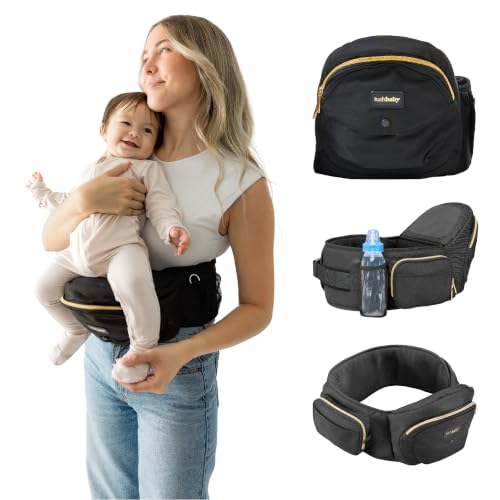
The Tushbaby Original uses a compact hip seat format for babies and toddlers up to 45 pounds, according to the product listing. Its no-foam design keeps the carrier focused on a firm seat and waist support rather than a large padded structure. The black and gold version adds a polished look without changing the main carrying concept. It also includes storage for small items that parents often need close at hand.
This model makes sense for parents who lift a child many times during the day. A hip seat can reduce the need to hold all of a child’s weight with one arm. It can also make short trips easier when a stroller feels like too much work. However, the seat still requires active support, especially with a young baby or a child who leans and reaches.
Pros:
- Lightweight no-foam design may feel less bulky.
- Listed capacity supports children up to 45 pounds.
- Storage helps hold small personal or baby items.
- Compact format suits quick trips and repeated lifts.
- Black and gold finish gives the carrier a neat, premium look.
- Firm seat design can help keep the child in a raised position.
- Useful for parents who switch often between walking and carrying.
Cons:
- The no-foam structure may feel firm rather than plush.
- It is not a fully hands-free baby carrier.
- Long carries may still place pressure on the wearer’s waist or hip.
- Young babies need close attention and proper positioning.
What Amazon Buyers Are Saying
Common buyer discussion around the Tushbaby Original focuses on convenience. Parents often look for a way to carry a growing child without lifting the full weight from the arm alone. Storage also receives attention because it can reduce the need to bring a separate small bag for keys, cards, or other light items.
Fit and comfort remain personal. A waist seat may work well for one parent and feel less natural for another. Some shoppers may also expect a traditional carrier and feel surprised by the need to support the child with an arm. I recommend reading current buyer reviews that mention waist size, child age, carry time, and the difference between a hip seat and a hands-free carrier.
My Recommendation
The Tushbaby Original in Black & Gold is worth considering if you want a light, simple hip seat for frequent short carries. I like its no-foam approach because it avoids some of the bulk found in larger carriers. It is a practical choice for toddlers who can sit well and want regular up-and-down access. I would choose a different style for long walks or situations that require both hands free.
Tushbaby Original Hip Seat, Grey

The grey Tushbaby Original offers the same basic hip seat concept in a neutral color. The listing describes it for babies and toddlers up to 45 pounds. Its lightweight no-foam design aims to keep the product easy to wear and carry between uses. A storage area adds function for quick errands, walks, and family outings.
I see this version as a style alternative rather than a separate performance model. The grey finish may appeal to parents who prefer a softer, low-key color. Like the black and gold version, it can help support a child at the wearer’s hip during short carrying periods. The parent must still support and watch the child, since a hip seat does not replace a secure, enclosed carrier.
Pros:
- Neutral grey color works well for many parents.
- Lightweight no-foam build may be easy to pack.
- Listed for babies and toddlers up to 45 pounds.
- Storage keeps small essentials within reach.
- Useful for children who ask to be carried on and off.
- Raised seat can reduce the need to hold the child low on the arm.
- Simple design avoids the extra parts of a larger carrier system.
Cons:
- The grey version may show dirt more clearly than a darker color.
- It does not provide fully hands-free carrying on its own.
- Some adults may need time to find the most comfortable waist position.
- It may not suit parents who want a soft, enclosed carrier body.
What Amazon Buyers Are Saying
Buyers who consider the grey Tushbaby usually focus on the same practical points as shoppers of the other Original color. They want less arm fatigue, fast access to a child, and a place to keep a few small items. The simple grey look can also appeal to parents who want a carrier that does not stand out.
As with any hip seat, buyer experiences can differ based on body shape, waist fit, child size, and carry time. A product that feels excellent for short lifts may feel less comfortable during a long outing. I advise checking the current listing, user photos, fit comments, and safety directions before making a final choice.
My Recommendation
I recommend the grey Tushbaby Original for parents who want the Original design in a calm, neutral finish. It offers a useful balance of portability, storage, and quick child access. I would select it when color matters and when most carrying will happen during short trips or frequent lifts. For longer use, I would compare it with a full carrier that gives more body support.
What Is a Fanny Pack Seat for Baby?
A fanny pack seat for baby is usually called a hip seat carrier. It has a padded or firm platform that sits at the adult’s waist. The child sits on that platform while the adult uses an arm to provide support. Some models include a back panel or straps, but the three products reviewed here focus on the waist-mounted seat style.
This design works best for short carrying periods. It can help when a child wants to be held during a walk, store visit, airport transfer, or home task. It also gives the adult a place to rest some of the child’s weight. It does not mean the adult can safely walk away or use both hands without checking the product’s instructions.
The word “fanny pack” can cause confusion. A normal waist pack stores items but does not support a child. A baby hip seat has a purpose-built sitting platform and a waist belt. Never place a child on an ordinary fanny pack, sling bag, or homemade waist pouch.
Safety Points I Check Before Buying
Safety matters more than color or storage. The American Academy of Pediatrics advises parents to follow carrier instructions and keep a baby’s face visible and airway clear. The U.S. Consumer Product Safety Commission also provides safety information for infant and toddler products. I use those principles when I judge any baby carrier or hip seat.
First, check the product’s age, weight, and developmental limits. A listed weight range does not mean every child can use the seat at every age. A newborn may need more head and neck support than an open hip seat provides. Follow the manual, and ask a pediatric professional if you are unsure about a young baby’s readiness.
Next, keep the child upright and close. The child should not slump, lean far away, or slide toward the edge. Keep the face visible. Do not cover the nose or mouth with clothing, a blanket, or your body. Stop at once if the child looks uncomfortable or cannot maintain a safe position.
Finally, use extra care on stairs, near hot surfaces, while cooking, and during fast movement. A hip seat can make a child feel secure, but it does not remove the risk of falls. Use a stroller, full carrier, or another approved option when the product manual says that is safer.
How to Choose the Best Fanny Pack Seat for Baby
Choosing the best fanny pack seat for baby takes more than picking the highest weight limit. I look at the fit, the child’s stage, the amount of support, and the way the seat will fit into real life. These three focused checks can help you avoid an expensive product that stays in a closet.
1. Match the Seat to Your Child’s Stage
Start with your child’s age, weight, and ability to sit upright. A baby who needs full head and neck support may not suit an open hip seat. A steady toddler who climbs up and down may benefit more from a quick seat than from a complex carrier.
Read the complete manual, not just the Amazon title. Look for directions about front carry, side carry, facing in, facing out, and the minimum age. The product listing may say “up to 45 pounds,” but the child’s development still matters. Weight alone does not tell you if a seat is safe or comfortable.
Also think about behavior. Some toddlers sit calmly. Others twist, reach, and try to lean away. A hip seat requires close supervision in both cases. If your child moves a lot, test the seat at home for a few minutes before using it in a busy place.
2. Compare Waist Fit and Back Comfort
The waistband controls much of the comfort. It should sit snugly without cutting into your skin. It should also stay in place when the child moves. An adjustable waistband can help different adults share the carrier, but each person should reset the fit before use.
Look for details that match your body. A wider belt may spread pressure across more of the waist. A firm seat may keep the child in a stable position, but it can also feel less soft. A no-foam design may pack easily while offering a firmer feel. Neither style suits every parent.
Try the seat with a child who can safely use it. Walk around the home. Sit down and stand up. Check if the platform digs into your hip or if the belt rolls. A few minutes of testing can reveal more than a product photo.
3. Judge Storage, Portability, and Value
Small storage can make a hip seat more useful. A pocket may hold keys, cards, a phone, wipes, or a pacifier. Do not overload it, since extra weight can pull the waistband down. Keep heavy items in a separate bag when possible.
Portability also matters. A compact seat may work well for travel, quick errands, and visits to relatives. It can stay in a car or diaper bag more easily than a large carrier. Check the folded size if you plan to pack it in luggage.
Finally, compare what you need with what you will use. The Momcozy offers a widened seat, adjustable waistband, and listed pockets. The Tushbaby Original models focus on a lightweight no-foam design, storage, and simple use. The best value is the model that fits your body and your child’s normal routine, not simply the one with the longest feature list.
Hip Seat vs. Full Baby Carrier
A hip seat and a full baby carrier solve different problems. A hip seat gives the child a platform. A full carrier often includes shoulder straps and a body panel that holds the child closer to the adult. The full carrier can distribute weight across the shoulders, back, and hips.
I prefer a hip seat for short periods and frequent up-and-down use. It works well when a toddler wants contact but also wants to walk. I prefer a full carrier for longer walks, travel days, or times when I need both hands available. The right choice depends on the child’s age, the product’s manual, and the adult’s comfort.
Do not judge a hip seat by the same standard as a hands-free carrier. Its main benefit is quick access and a raised sitting platform. Its main limit is the need for active arm support. Understanding that difference helps prevent unsafe use and buyer disappointment.
How I Evaluated These Baby Hip Seats
I focused on features that affect daily use. I compared the listed weight range, seat shape, waistband design, storage, portability, and the level of support each product appears to provide. I also considered how each model may suit a toddler who wants repeated lifts throughout the day.
I did not treat a product title as proof of every safety feature. Product details can change, and colors may share a design while having different listings. Always confirm current specifications, stock, fit options, and instructions on Amazon before ordering.
I also kept the ratings practical. A high score does not mean a product fits every parent or child. It means the product has a strong match for the use described in this review. Use the rating tables as a starting point, then compare them with your own needs.
Final Verdict: Which Should You Buy?
The Momcozy Hip Seat Carrier is my top pick for the best fanny pack seat for baby because it combines a widened seat, adjustable waistband, listed pockets, and a 45-pound listed limit. The Tushbaby Original remains a strong light option for short, repeated carries.
Choose the model that fits your waist and your child’s stage. A hip seat works best with close supervision, correct positioning, and realistic carry times.
FAQs Of best fanny pack seat for baby
Is a fanny pack seat safe for a newborn?
Not always. Check the exact manual for age and head-support rules. A newborn may need more support than an open hip seat provides. Ask a pediatric professional if you are unsure.
Can a baby hip seat be used hands-free?
Do not assume it can. A waist-mounted hip seat often needs one arm to support the child. Use a full carrier only when its instructions allow hands-free use for your child’s age and size.
What weight can these hip seat carriers hold?
The reviewed listings state use up to 45 pounds. Always confirm the current product instructions and follow any lower limit based on the child’s age or development.
Is a hip seat better than a traditional baby carrier?
Neither is best for every family. A hip seat suits quick lifts and short carries. A full carrier may work better for long walks or when you need more body support.
What should I carry in the hip seat pockets?
Keep light items such as keys, cards, a phone, or a pacifier in the pockets. Avoid heavy loads that may pull the waistband down or affect the child’s position.
2 thoughts on “Best Fanny Pack Seat For Baby: Safe Travel Guide”