
The best seat belt adjuster for booster seat use is one that improves comfort without changing the belt’s safe fit.
A child may sit in a booster correctly, yet still complain that the shoulder belt rubs the neck or that the buckle sinks between the cushions. A small comfort pad or buckle holder can make daily trips easier. Still, these items do not replace a properly fitted booster seat. I recommend checking the vehicle manual, booster instructions, and current NHTSA guidance before using any accessory. The lap belt must stay low on the hips, while the shoulder belt must cross the chest and shoulder.
See the differences between my top picks at a glance.
Mokiwala Shoulder and Belly Padding

The Mokiwala padding set targets two common comfort problems: shoulder rubbing and pressure near the child’s belly. Its soft cover design adds a cushion layer where the belt touches the body. The dinosaur style may also appeal to children who resist wearing a seat belt. In my view, it works best as a comfort accessory, not as a device that changes belt position.
Fit matters more than appearance here. The cover should sit around the belt without twisting it or pushing the belt away from the child’s body. I would place the booster and child first, buckle the belt, and then check the belt path before allowing the accessory to stay in use. If the pad causes the shoulder belt to move toward the neck or the lap belt to rise onto the stomach, remove it.
Pros:
- Addresses both shoulder and belly comfort
- Soft cover may reduce rubbing during longer rides
- Child-friendly dinosaur design may improve acceptance
- Useful for children who complain about rough belt contact
- Simple accessory format with no complex setup
- Can complement a compatible high-back or backless booster
Cons:
- It does not replace a booster seat or correct a poor belt fit
- Extra padding may affect belt placement on some children
- The cover needs regular cleaning after snacks and spills
- It may not suit every vehicle belt shape or seating position
What Amazon Buyers Are Saying
Buyer feedback for comfort pads usually centers on softness, child appeal, and whether the cover stays in place. Some shoppers value the extra cushion on road trips and report that children complain less about belt rubbing. Other buyers may find that fit depends on the belt width, the child’s size, and the vehicle seat shape. Because accessory fit can vary, I would read the latest customer images and comments before ordering rather than relying on the product photo alone.
My Recommendation
I recommend the Mokiwala for a child who already has a correct belt fit but needs a softer contact point. It is a reasonable comfort choice when used under close adult supervision. I would not buy it to solve a shoulder belt that sits on the neck or a lap belt that rides high. For comfort alone, it offers good value, but careful fit checks remain essential.
| Category | Rating |
|---|---|
| Comfort design | 4.3/5 |
| Ease of use | 4.2/5 |
| Belt-fit awareness | 3.8/5 |
| Value | 4.2/5 |
| Overall Rating | 4.1/5 |
Amiss Two-Piece Seat Belt Buckle Holder
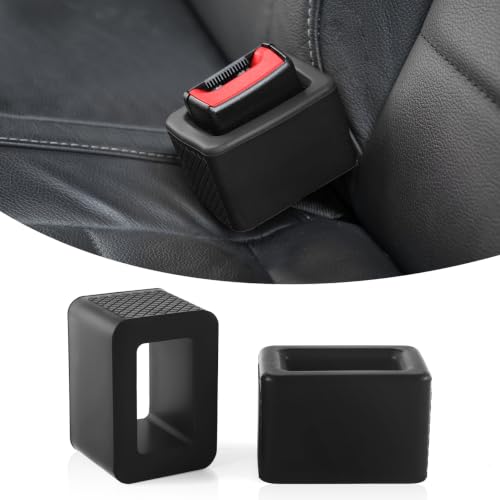
The Amiss holder focuses on a different problem from a shoulder pad. It aims to keep a rear-seat buckle receptacle upright and easier to reach. That can help when a buckle sinks between the seat cushion and the backrest. The two-piece format may be useful for families who want to improve access in more than one rear seating position.
This product should not force the buckle into a new position during a crash. Before use, I would test the buckle with the holder installed and confirm that the latch clicks fully into place. I would also check that the holder does not cover the release button or interfere with the booster base. Its value depends on the shape of the vehicle’s buckle and the space around it.
Pros:
- Targets hard-to-reach rear-seat buckles
- Two-piece pack can serve two seating positions
- Silicone format may feel soft against interior trim
- Can reduce the need to search under seat cushions
- May help older children buckle with less help
- Compact design takes little storage space
Cons:
- It does not adjust the shoulder or lap belt path
- Universal fit claims may not cover every vehicle
- Incorrect placement could block the buckle release
- It may not work well beside a wide booster base
What Amazon Buyers Are Saying
Feedback on buckle holders often highlights easier access in vehicles where the receptacle drops low or leans into the seat gap. Buyers tend to care most about whether the silicone grip stays upright and whether the holder fits their particular buckle. The most useful reviews are those that name the vehicle and show the installed product. Since vehicle interiors differ, I would treat “fits most cars” as a starting point, not a guarantee.
My Recommendation
The Amiss holder is worth considering when the main issue is buckle access rather than belt comfort. It may make self-buckling simpler for a responsible older child, but an adult should inspect the connection every trip. I would choose it only after confirming that it does not obstruct the latch or change the buckle’s normal operation. For that narrow purpose, it is a practical option.
| Category | Rating |
|---|---|
| Buckle access | 4.4/5 |
| Ease of installation | 4.1/5 |
| Vehicle compatibility | 3.8/5 |
| Practical value | 4.2/5 |
| Overall Rating | 4.1/5 |
Silicone Seat Belt Buckle Booster, Two-Pack

This two-pack is made for a buried or floppy rear-seat buckle. Its silicone body is intended to raise the receptacle so the user can find it with less effort. That feature can help in deep seats, especially when the buckle falls beside a booster. The BPA-free material claim may also appeal to parents who want a simple material choice, although it does not by itself confirm crash performance.
I see this as a convenience tool, not a child restraint device. The buckle must still lock in the normal way, and the belt must remain free from twists. I would check the holder after each installation and remove it if it presses against the booster shell or prevents a full latch. A two-pack can offer better value when two rear seats have the same access problem.
Pros:
- Two holders can serve two rear seating positions
- Designed to make a low buckle easier to find
- Flexible silicone may fit around some buckle shapes
- Useful for family vehicles with deep seat cushions
- May reduce daily frustration during school runs
- Simple design has no batteries or moving parts
Cons:
- Fit can vary sharply between vehicle models
- It may not be suitable beside every booster seat
- It can become dirty in a busy rear seat
- It should not be used if it affects normal buckle release
What Amazon Buyers Are Saying
Customer comments on this type of buckle booster commonly focus on whether it keeps the receptacle standing and whether children can reach it. Positive reports tend to mention less “fishing” between the cushions. Critical reports usually relate to a loose fit, a vehicle-specific mismatch, or interference with nearby seats. I suggest checking recent reviews for your vehicle and comparing the product shape with your buckle before purchase.
My Recommendation
This is one of the better value choices when two buckles need help and the vehicle has enough room around each receptacle. I would not select it for a child whose belt fit already needs correction. Use it only when it preserves the buckle’s normal movement and release. With that limit, the two-pack earns a strong convenience rating.
| Category | Rating |
|---|---|
| Buckle visibility | 4.4/5 |
| Pack value | 4.5/5 |
| Ease of use | 4.2/5 |
| Fit confidence | 3.8/5 |
| Overall Rating | 4.2/5 |
COOLBEBE Kids Seat Strap Cover Pads

The COOLBEBE set provides soft covers for areas where a strap can rub a child’s shoulder or belly. Its gray color has a simple look that can blend with many car interiors. The listing also presents it for boosters, strollers, and high chairs, so it may serve more than one child-care use. For vehicle use, I would focus on whether it keeps the seat belt flat and correctly placed.
A cover can improve comfort, but more material is not always better. The shoulder belt should still touch the shoulder and chest in the right path, and the lap belt should remain low across the upper thighs. I would avoid placing padding between the child and the lap belt if it lifts the belt onto the abdomen. Frequent removal for washing is also sensible because strap covers collect food, dust, and sweat.
Pros:
- Designed to soften shoulder and belly contact points
- Neutral gray color suits many interiors
- May help children tolerate longer rides
- Listed for use with several child-care products
- Easy concept for parents to understand
- Can be useful for travel when comfort is a concern
Cons:
- It may not fit every belt or strap width
- Padding can change belt contact if placed poorly
- It does not correct a booster that does not fit the child
- Fabric and padding need regular cleaning
What Amazon Buyers Are Saying
Reviews of strap covers often praise a softer feel and a cleaner look than a bare strap. Buyers also tend to discuss whether the pads slide, feel bulky, or stay comfortable during longer trips. Some families use similar covers in strollers or high chairs, while others buy them only for the car. As with any universal cover, I would look for recent photos and comments about your exact belt width and seat type.
My Recommendation
The COOLBEBE set makes sense for a child who needs a softer belt contact point across more than one product. It is not my first choice for a buckle buried in the seat, and it should never be used to force a belt into a safer-looking path. Buy it for comfort, then confirm the belt still fits the child exactly as the booster maker shows. I rate it as a solid comfort accessory when monitored.
| Category | Rating |
|---|---|
| Softness and comfort | 4.2/5 |
| Versatility | 4.2/5 |
| Fit control | 3.9/5 |
| Care and upkeep | 4.0/5 |
| Overall Rating | 4.1/5 |
How to Choose the Best Seat Belt Adjuster for Booster Seat Use
Choosing the best seat belt adjuster for booster seat use starts with the problem you need to solve. A comfort pad may help with rubbing, while a buckle holder may help with access. Neither product can replace a correctly fitted booster or repair a poor belt path. I use the following checks before recommending any child car accessory.
1. Start With the Belt Fit, Not the Accessory
Place the child in the booster and buckle the vehicle belt first. The lap portion should sit low across the hips and upper thighs. It should not rest across the soft belly. The shoulder portion should cross the middle of the chest and shoulder, not the neck or upper arm.
The child should sit upright with the back against the vehicle seat or booster back. The knees should bend near the seat edge, and the child should stay in position for the full ride. If the child slouches, leans, or moves the belt behind the back, an adjuster will not solve the main problem. Check the booster manual and ask a certified child passenger safety technician for help.
2. Match the Product to the Real Problem
Choose a shoulder or belly pad when the belt fits well but feels rough. Choose a buckle holder when the receptacle drops into a gap and remains hard to reach. Do not buy a buckle holder to raise the lap belt. Do not buy padding to pull a shoulder belt away from the neck.
Read the product details with care. Look for the material, pack count, cleaning method, and stated use. A product described as “universal” may still fail to fit your vehicle. Compare the accessory with the buckle size, seat cushion depth, and booster footprint. A quick test in the parked car can reveal more than a product photo.
3. Check Safety, Comfort, and Long-Term Value
The best seat belt adjuster for booster seat use should leave the belt flat, free, and easy to release. It should not hide the buckle button. It should not trap the belt, add a thick layer under the lap section, or stop the buckle tongue from clicking fully. Inspect the setup each time the child rides, especially after moving the booster.
Comfort also affects value. A child may resist a belt that scratches or pinches, so a suitable cover can support better daily use. However, soft material must stay clean and secure. Remove the item if it slides, bunches, cracks, or changes the belt fit. In many cases, a low-cost accessory is useful only when it solves one clear problem without creating another.
Finally, follow current guidance from the National Highway Traffic Safety Administration, the American Academy of Pediatrics, and the booster maker. State laws differ, and a child’s age, height, weight, and maturity all matter. No aftermarket adjuster should override the vehicle manual or the child restraint instructions.
Final Verdict: Which Should You Buy?
For a buried buckle, I prefer the Silicone Seat Belt Buckle Booster two-pack. For shoulder or belly rubbing, the Mokiwala offers the most focused comfort design. The Amiss holder suits buckle access, while COOLBEBE fits families seeking soft covers for several child-care products.
The best seat belt adjuster for booster seat use is the one that solves a small comfort or access issue without changing belt fit. Check the setup every trip, and use a certified technician when unsure.
FAQs Of best seat belt adjuster for booster seat
Can a seat belt adjuster replace a booster seat?
No. A seat belt adjuster cannot replace a booster seat. Use a booster until the vehicle belt fits the child correctly without it.
What is the best seat belt adjuster for a child with neck rubbing?
A soft shoulder pad may reduce rubbing, but first confirm that the booster and belt fit the child. Remove any pad that moves the belt toward the neck.
Are silicone buckle holders safe for booster seats?
They may help with buckle access when compatible with the vehicle. They must not block the release button, prevent a full latch, or change normal buckle operation.
How do I know if a booster seat belt adjuster fits?
Test it in the parked vehicle. The belt must stay flat, the buckle must click fully, and the lap and shoulder portions must remain in the correct paths.
Should I use an aftermarket belt positioner with a booster?
Use one only if the booster maker and vehicle instructions allow it. Many aftermarket positioners can change belt routing, so ask a child passenger safety technician when in doubt.