
Finding the best bike seats for kids starts with fit, safety features, comfort, and the right riding style.
A family bike ride can change fast when a child feels cramped, slips forward, or cannot rest their feet. The right child bike seat helps solve those problems while making rides calmer for both of you. I compared front-mounted toddler seats, rear carriers, a mountain bike seat, and a replacement saddle. My picks below focus on harness design, foot support, mounting style, comfort, age range, and daily value. Always check the product guide, your bike frame, and your child’s size before riding.
See the differences between my top picks at a glance.
| Product | Mount | Best For | Key Safety Feature | Notable Detail | Buy |
|---|---|---|---|---|---|
| Toddler Front Bike Seat | Front | Young toddlers | Full guardrail | Listed max load of 55 lb | View on Amazon |
| Alaxciax Front Seat | Front | Ages 2–5 | Handlebars and foot pedals | Mountain-style front design | View on Amazon |
| Schwinn Deluxe Child Carrier | Rear frame | Ages 1+ | 3-point harness | Foot wells and quick release | View on Amazon |
| Shotgun Pro EVO Seat | Front | Mountain bikes and e-bikes | Harnessed seat option | Two seat modes and no frame contact | View on Amazon |
| WEEROCK Kids Replacement Saddle | On child’s bike | Ages 14–24 inch bikes | Rider-controlled bike use | Replacement seat for kids’ bicycles | View on Amazon |
Toddler Front Bike Seat With Guardrail
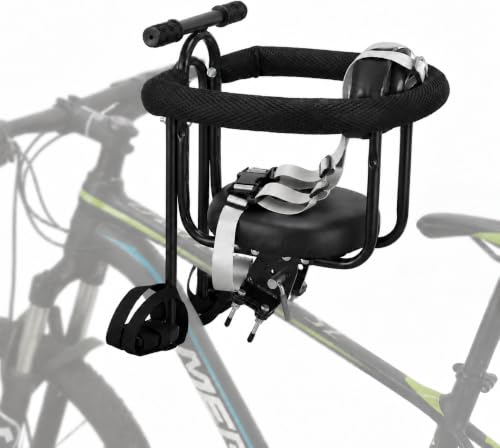
This front-mounted toddler bike seat gives a young child a close view of the ride. Its listed design includes a full guardrail, which can help create a more enclosed sitting area. The product listing states that it suits children from 1 to 4 years and supports up to 55 pounds. Still, I would treat those numbers as a starting point and confirm your child’s height, weight, and ability to sit safely.
The front position lets you see your child without turning your head far back. That can make short family rides feel more connected. The seat is listed for mountain, hybrid, and cruiser bikes, but bike fit still matters. Before buying, check handlebar space, steering clearance, frame shape, and the maker’s mounting directions.
Pros:
- Front position keeps the child within easy view
- Full guardrail adds a more enclosed riding area
- Listed for children ages 1 to 4 years
- Listed maximum load of 55 pounds
- Works with several common bike styles according to the listing
- Good choice for parents who want close interaction
Cons:
- Front seats can affect steering balance and rider movement
- Compatibility must be checked before installation
- The listed maximum load does not replace a proper fit check
What Amazon Buyers Are Saying
Buyer feedback for this kind of front toddler seat often centers on closeness, simple child access, and the front view. Some shoppers may also focus on how well the seat fits a specific bike. As with most universal-style bike accessories, installation results can vary by frame and handlebar layout. I recommend reading the newest reviews for comments about your exact bike type instead of relying only on the product title.
My Recommendation
I recommend this model for a parent who wants a front-mounted seat with a guardrail and a clear view of a young child. It has useful listed features, but fit and installation deserve careful attention. It is worth considering for relaxed rides on a compatible bike, not for rough or fast riding.
Alaxciax Front Mounted Kids Bike Seat

The Alaxciax front-mounted bicycle seat has a more active design than a simple toddler carrier. The listing includes handlebars and foot pedals, along with an intended age range of 2 to 5 years. This layout may give a child a clearer place to hold and rest their feet during a ride. It also creates a front seating position where the parent can watch the child.
I see this as a fun option for families who want a child to feel part of the ride. The mountain-style look may appeal to parents who ride on paved paths or easy trails. However, a front seat changes the feel of the bike, so I would practice in a quiet area before carrying a child near traffic or on uneven ground.
Pros:
- Front placement supports easy child supervision
- Handlebars give the child a clear hand position
- Foot pedals give the child a defined foot-rest area
- Listed for children ages 2 to 5 years
- Mountain-style design suits active family-bike themes
- May make short rides more engaging for an older toddler
Cons:
- Front placement may feel less natural for new riders
- Fit can depend on the adult bike’s frame and cockpit
- It may not provide the same enclosed support as a full guardrail seat
What Amazon Buyers Are Saying
Common buyer discussion around front seats with handlebars often includes child enjoyment, ease of use, and bike fit. Shoppers may like the way the child can hold on and take part in the ride. The most useful review details usually explain the adult bike model, the child’s size, and whether installation left enough room for steering. I would use those details to judge compatibility rather than assuming every mountain or hybrid bike will fit.
My Recommendation
This seat is a good match for families who want a front child bike seat with handlebars and foot pedals. I would choose it for calm rides with a child in the listed age range and for a bike that passes a careful fit check. It earns strong marks for interaction, but not every adult rider will enjoy the changed balance.
Schwinn Deluxe Rear Child Bike Carrier

The Schwinn Deluxe Child Bike Carrier takes a traditional rear-mounted approach. Its listed features include a frame mount, a three-point safety harness, foot wells, padding, and a quick-release design. The product listing says it seats one child ages 1 and up. A rear seat keeps the child behind the rider, which many parents prefer for a familiar and balanced riding position.
The foot wells help define where a child’s feet should rest. The three-point harness adds an important restraint feature, while the padding may improve comfort on short trips. The quick-release design may help when you need to remove the carrier, but I would still inspect every connection before each ride.
Pros:
- Rear frame-mount design suits classic family cycling
- Three-point harness helps hold the child in place
- Foot wells provide a clear foot position
- Padded seat aims to improve comfort
- Quick-release design may simplify removal
- Listed for children ages 1 and up
Cons:
- The rear position makes direct visual checks less immediate
- Frame compatibility requires close attention
- Older or larger children may outgrow it sooner than expected
What Amazon Buyers Are Saying
Amazon buyers often look at rear carriers for their familiar layout, child restraint, padding, and foot protection. Reviews can also differ based on the adult bike frame and the buyer’s installation skill. Some shoppers may praise the quick-release idea, while others may need extra time to align the mount. Read current reviews for notes on stability, fit, and the bike models customers used.
My Recommendation
The Schwinn Deluxe is one of the most balanced choices in this group for parents who prefer a rear-mounted child carrier. Its harness, foot wells, padding, and quick-release design cover the features I want to see in a daily-use seat. I recommend it for compatible bikes and supervised, low-speed rides.
Kids Ride Shotgun Pro EVO Seat

The Kids Ride Shotgun Pro EVO stands apart because it offers two seating modes in one product. The listing describes a harnessed seat and a saddle, plus a handlebar. It also highlights enhanced compatibility with mountain bikes and e-bikes and a zero-frame-contact design. That makes it especially interesting for parents who want to share trail-style rides with a young child.
The front position gives the child a view of the trail and lets the parent stay engaged. The two-mode idea can also make the seat useful as a child grows or gains confidence. I would not treat “mountain bike” compatibility as permission for hard jumps or rough downhill riding. The adult rider should keep speed low, choose smooth paths, and follow all safety directions.
Pros:
- Two seat modes offer more use options
- Harnessed mode can suit children who need more support
- Saddle mode may suit a more confident child
- Handlebar gives the child a stable hand position
- Zero-frame-contact design helps protect the bike frame
- Listed with compatibility for mountain bikes and e-bikes
Cons:
- Premium features may cost more than basic carriers
- Fit checks remain essential for each bike
- A front trail seat demands careful speed and route choices
What Amazon Buyers Are Saying
Buyers who consider this type of seat often focus on the two modes, bike protection, and trail use. Review value depends heavily on the customer’s bike type and child size. Some shoppers may appreciate the close riding experience, while others may find setup or compatibility more involved than expected. I suggest checking recent comments about e-bike fit, frame clearance, and real riding conditions before ordering.
My Recommendation
I recommend the Shotgun Pro EVO for experienced family riders who want a flexible front seat for compatible mountain bikes or e-bikes. The two modes and zero-frame-contact design are strong advantages. It is not my first choice for a simple neighborhood ride, but it is the most feature-rich option in this comparison.
WEEROCK Kids Replacement Bike Saddle

The WEEROCK Kids Bike Seat is different from the other products here. It is a replacement saddle for a child’s own bicycle, not a carrier that mounts to an adult bike. The listing names compatibility with 14-, 16-, 18-, 20-, and 24-inch kids’ bicycles. It may help when a child’s original saddle feels worn, damaged, or uncomfortable.
This seat makes sense for children who already ride their own bike. It does not carry a child behind or in front of an adult rider, and it does not replace a harnessed child carrier. Before ordering, compare the seat post connection and mounting measurements with the child’s bicycle. A good saddle can improve comfort, but the full bike must still fit the rider.
Pros:
- Useful as a replacement saddle for a child’s bike
- Listed for several common kids’ bicycle wheel sizes
- May refresh an old or damaged seat
- Suitable for boys’ and girls’ bicycles according to the listing
- Black and red color scheme can add a sporty look
- Lets the child ride independently on their own bicycle
Cons:
- It is not an adult-bike child carrier
- It does not include a child harness or guardrail
- Exact seat-post fit must be checked before purchase
What Amazon Buyers Are Saying
Reviews for replacement saddles usually focus on comfort, appearance, installation, and fit on a particular child’s bike. Buyers may like the chance to replace a worn seat without replacing the whole bicycle. The most helpful feedback often includes the bike’s wheel size and the seat-post details. I would read current reviews closely because wheel size alone does not prove that every mounting connection will match.
My Recommendation
I recommend the WEEROCK saddle only when you need a replacement seat for a child’s own bicycle. It is not one of the best bike seats for kids who need to ride on an adult bike. For the correct use, it offers a simple way to refresh an older kids’ bicycle, earning a practical 4/5.
How to Choose Best Bike Seats for Kids
Choosing the best bike seats for kids takes more than comparing colors and star ratings. First, decide whether you need a carrier for an adult bike or a replacement saddle for a child’s bike. Then check the child’s size, the bike frame, the mount, and the ride type. A seat that works well for a paved path may not suit a rough trail. Safety guidance from groups such as the American Academy of Pediatrics and the Consumer Product Safety Commission also supports careful helmet use, proper restraints, and age-appropriate riding.
1. Match the Seat to Your Child
Start with age, weight, height, and sitting control. Product age ranges help, but they do not tell the whole story. Your child should fit the seat without crowding the harness, guardrail, foot wells, or handlebars. A child who falls asleep often needs more support than a child who sits upright and follows directions.
Never choose a seat only because it lists a high maximum weight. Check the complete fit. The child should sit deep in the seat, keep their feet away from the wheel, and wear a properly fitted helmet. If the product uses a harness, make sure it closes well and does not rub the neck.
2. Check Mounting and Bike Compatibility
Mounting style changes the ride. A front seat keeps the child in view, but it can affect steering and knee space. A rear seat may feel more natural, but you must turn or stop to check the child. A frame-mounted product may need a certain frame shape, handlebar layout, seat-post space, or clearance around cables.
Read the full installation guide before you buy. Measure the bike when the product maker asks for measurements. Check that the mount does not touch brakes, gears, suspension parts, or moving wheels. After installation, lift and gently rock the empty seat. Then take a slow test ride without a child.
3. Choose Features for Your Real Rides
Think about where you ride most. For short neighborhood trips, padding, a harness, foot support, and easy removal may matter most. For trail use, frame protection, strong fit, child hand support, and a low-speed riding plan deserve more attention. A front seat with a handlebar can make a child feel involved, while a rear carrier may offer a more familiar layout.
Also consider storage and daily use. A quick-release design can help if you switch between solo and family rides. A two-mode seat can offer more flexibility, but it may cost more and need more setup. The best bike seats for kids balance safety, comfort, fit, and value instead of chasing the longest feature list.
Final Verdict: Which Should You Buy?
For most families, the Schwinn Deluxe Child Bike Carrier is the best all-around pick because it combines a rear mount, three-point harness, foot wells, padding, and quick release. Choose Shotgun Pro EVO for compatible mountain bikes and e-bikes.
The best bike seats for kids depend on fit and riding style. Measure first, install with care, use a helmet, and practice in a safe area before every family adventure.
FAQs Of best bike seats for kids
Are front or rear bike seats safer for kids?
Neither position works for every bike or child. Front seats improve visibility, while rear seats may feel more stable to many riders. Choose the seat that fits your bike and child correctly.
What age can a child use a bike seat?
Age depends on the product and the child’s development. Follow the maker’s age, weight, and height guidance. The child must sit well and wear a properly fitted helmet.
Can I use a child bike seat on an e-bike?
Only if the seat maker allows it and the e-bike passes the fit check. Confirm frame clearance, mounting strength, speed control, and the product instructions before riding.
How do I know if a kids bike seat fits my bicycle?
Check the frame, handlebar space, seat-post area, cables, brakes, wheel clearance, and mount measurements. Install the seat without a child and test it at low speed first.
Is the WEEROCK saddle a child carrier?
No. The WEEROCK is a replacement saddle for a child’s own bicycle. It does not carry a child on an adult bike and does not include a harness or guardrail.