
Starting at a price of about $50 for a basic entry-level model, cheap off road rc cars provide a fun way to experience hobby-grade radio control without a high initial cost. These vehicles generally use plastic chassis components and brushed motors to keep prices low while still delivering capable performance on dirt, gravel, and grass. While more expensive models offer metal parts and faster speeds, these budget options are designed for durability and ease of repair for those just starting out.
How to compare cheap off road cars
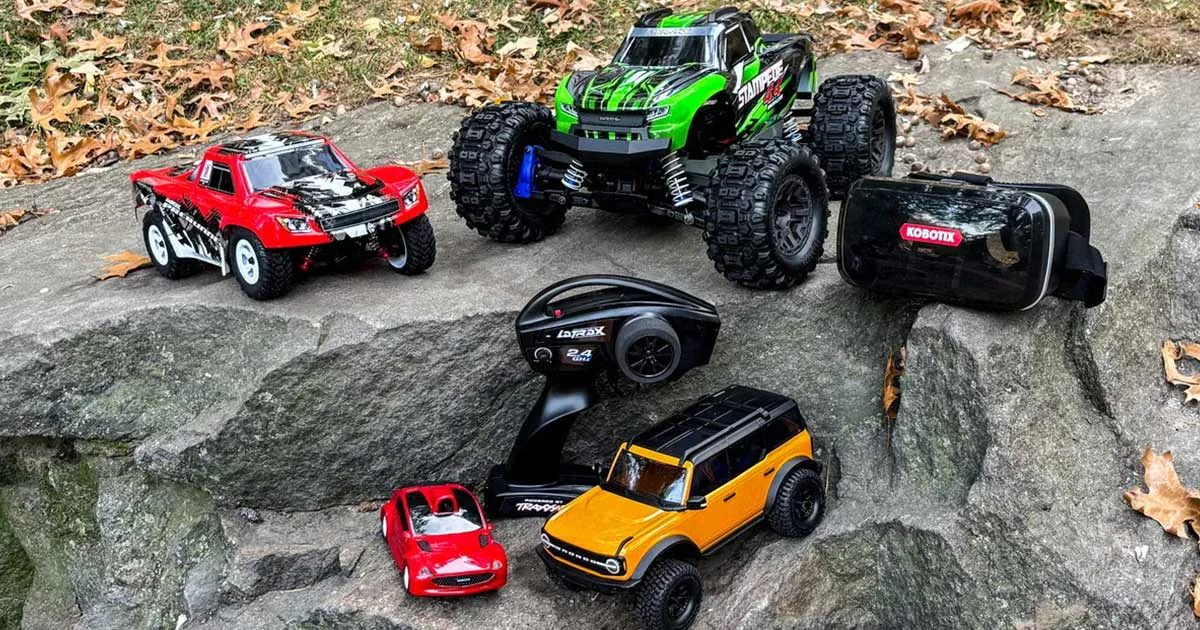
You can find many different styles of remote-controlled vehicles that handle rough terrain. The following table breaks down the most common types you’ll encounter when shopping for a budget model.
| Vehicle Type | Best Use | Common Example |
|---|---|---|
| Monster Truck | Bashing and jumps | Large tire models |
| Short Course | Dirt track racing | Scaled truck replica |
| Rock Crawler | Climbing over obstacles | High-torque 4WD vehicle |
| Buggy | Flat dirt surfaces | Low-profile racing frame |
| Truggy | Mixed terrain driving | Hybrid chassis design |
If you prioritize durability over speed, choose a monster truck with oil-filled shocks. Beginners often make the mistake of buying a rock crawler for backyard racing.
Apply this rule: if your terrain includes loose gravel or grass, choose a vehicle with a ground clearance of at least one inch. If you plan to drive exclusively on packed dirt or asphalt, prioritize a lower center of gravity to prevent flipping during sharp turns. Always check that the model uses standard hex-size wheel hubs, as this allows you to swap tires cheaply when the factory rubber wears thin.
Monster truck models
Monster trucks are the most popular choice for beginners because their large tires and high ground clearance make them effective on almost any surface. These vehicles are designed to absorb impacts from small jumps and uneven terrain, which helps prevent damage to the internal electronics. If you drive on loose dirt or thick grass, these are the most reliable option for consistent traction.
- Large rubber tires provide extra grip on slippery surfaces.
- High ground clearance allows the vehicle to drive over rocks.
- Independent suspension helps the truck land jumps without breaking.
- Wide wheelbases reduce the chance of flipping over during sharp turns.
If you’re using a standard 1:10 scale monster truck, expect a run time of about 15 to 20 minutes on a fully charged battery. For heavy off-road use in tall grass, the motor draws more power, which can cut that time down by about 5 minutes. Always check the manufacturer’s battery specifications to see if your model supports high-capacity packs for longer sessions.
Short course trucks
Short course trucks mimic the look of full-size racing trucks with a body that covers the wheels to protect them during side-by-side contact. These vehicles are built for stability and speed on groomed dirt tracks rather than heavy rock crawling. They’re ideal if you want a vehicle that feels realistic and handles well at higher speeds on flat, dusty paths.
- Full-body shells protect the chassis from dust and debris.
- Aerodynamic design keeps the car planted during fast corners.
- Adjustable shocks allow you to tune the ride height.
- Realistic proportions make them look like professional race trucks.
An example of this is a 2WD short course truck with a brushed 540-size motor. These models are often easier to repair than 4WD versions because there are fewer drive shafts to maintain. When you notice the car struggling to maintain a straight line on a track, check the wheel alignment, as even a small bump can knock the steering trim out of place.
Rock crawlers
Rock crawlers are built for torque and precision rather than high-speed racing. These vehicles use a low gear ratio that lets them move slowly over steep rocks and logs without losing control. If you have a backyard with uneven terrain or lots of obstacles, a crawler is the best choice for a slow, methodical driving experience.
- High-torque motors provide power for steep vertical climbs.
- Soft tire compounds grip uneven surfaces like rock or wood.
- Articulating suspension allows wheels to stay on the ground.
- Low center of gravity prevents the vehicle from tipping backward.
One important limit is that these cars aren’t meant for speed; if you try to drive them on a flat street, they will feel very slow. Most hobby-grade crawlers are rated for water resistance, but you should verify the specific IP rating provided by the manufacturer. Always inspect your RC batteries for physical damage before charging to prevent overheating risks.
Electric off road buggies
Buggies are designed with a low center of gravity and lightweight frames for maximum speed on dirt tracks. They aren’t as capable as monster trucks on tall grass, but they excel when you want to perform controlled slides and quick maneuvers. If you enjoy driving on packed dirt or clay, the nimbleness of a buggy is hard to beat.
- Low-profile design minimizes wind resistance at high speeds.
- Lightweight components allow for faster acceleration from a stop.
- Precision steering linkage provides tight control in corners.
A common mistake is running these cars on surfaces that are too rough, such as tall grass or deep sand, which causes the motor to overheat. If the motor gets too hot to touch after five minutes of driving, you’re likely putting too much strain on the drivetrain. Switch to a smoother, flatter surface to keep the electronics within their safe operating range.
Other vehicle types to consider
Stadium Trucks bridge the gap between agility and stability. They feature the wide stance of a monster truck paired with the lower center of gravity found in buggies. This configuration prevents the frequent rollovers common with taller vehicles when you’re cornering on flat pavement or hard-packed dirt.
Desert Buggies prioritize aesthetic realism through exposed roll cages and detailed driver cockpits. These machines excel in loose sand or deep gravel where their specific tire tread patterns provide necessary mechanical grip. If you prefer high-speed desert runs over technical rock climbing, choose these.
Trail Trucks prioritize visual authenticity over raw speed. Unlike competition crawlers that strip away body panels to save weight, these mimic full-sized pickup trucks. They’re best for drivers who enjoy slow, deliberate navigation over roots and rocks. If you find yourself obsessing over scale accessories like roof racks or working lights, a trail truck is your objective.
Choosing the right vehicle for you
Selecting the right vehicle depends on your available space and how you plan to drive. If you have a backyard with grass or dirt mounds, a monster truck or stadium truck will be your best choice because they handle the uneven terrain without getting stuck. If you have access to a flat dirt track or a smooth gravel area, a buggy or short course truck will provide a much more exciting experience at higher speeds.
If you’re a complete beginner, start with a 2WD model because it has fewer moving parts to break and is cheaper to maintain. Beginners often make the mistake of buying a high-speed vehicle first, which leads to expensive repairs after the inevitable first-day collision. Stick to 2WD until you can navigate a simple figure-eight course without hitting an obstacle.
If you want to drive in challenging environments like large rock piles, you must choose a 4WD rock crawler. These vehicles feature locked differentials that force power to every wheel, ensuring you maintain traction on steep inclines. If your primary goal is speed, avoid crawlers entirely, as their low gear ratios will frustrate you on flat ground. For most people, picking one specific type is better because the suspension and tires are tuned for that single purpose.
Frequently asked questions
How long does the battery last on these cars?
Most entry-level RC cars last between 15 and 20 minutes on a single charge. This figure assumes you’re using a standard 2000mAh battery pack on a relatively flat surface. If you drive in thick grass or loose sand, the motor works harder and drains the battery about 25% faster than on hard-packed dirt.
Are these cars safe for children?
These vehicles are generally safe for children aged 8 and up when used under adult supervision. The primary risk is the battery, which can get hot or spark if damaged or shorted. Always ensure the child understands that the car must be turned off and the battery disconnected after the play session is over to prevent accidental drain.
Why does the car stop working when it gets wet?
Most budget RC cars are water-resistant but not fully waterproof, meaning the electronics will short if submerged. If your car stops working after driving through a puddle, the internal receiver or speed controller likely has moisture inside. You should stop using it immediately, remove the battery, and let the unit dry in a warm, dry place for at least 24 hours.
Can I upgrade the speed of a cheap model?
You can increase speed by installing a higher-rated battery or a faster motor, but this often leads to broken gears. Most budget chassis are made of plastic that can’t handle the extra torque of a powerful motor. If you want more speed, it’s almost always more cost-effective to buy a model designed for higher performance from the start.
Do I need a special charger for the battery?
You should use the specific charger included in the box to avoid damaging the battery chemistry. If you upgrade to a different battery type, such as a LiPo pack, you must buy a charger that specifically supports that chemistry. Using the wrong charger is the most common cause of battery fires in the hobby.
What happens if I break a part?
You can replace almost every part on these cars, as most manufacturers sell individual spares. Check the manual for the “parts list” to find the specific item number for the broken component. If the part is a structural piece of the frame, look for optional metal upgrades which can make the car more durable for future driving.
Does it matter if I drive on sand?
Driving on sand is very hard on the drivetrain because fine particles get into the gears and act like sandpaper. If you choose to drive on the beach, you must clean the car thoroughly with compressed air after every session. Failure to remove the sand will wear out your bearings and gear teeth in just a few hours of use.
Conclusion
Start by charging your battery fully before the first run to ensure the motor has enough power for the break-in period. You’ll know the car is ready when the steering responds crisply to your inputs and the motor sounds smooth during low-speed testing. If the car makes a grinding noise or the wheels don’t turn when you press the trigger, stop immediately and check the gear mesh to avoid permanent damage.