
The best toys for 7 month old babies support safe sensory play, movement, and early learning.
At seven months, many babies want to grab, shake, pull, mouth, and explore everything nearby. A simple rattle may hold attention for a moment, while a toy with textures, sounds, lights, or moving parts can invite longer play. The right choice should match your baby’s stage, feel easy to hold, and stay simple enough for independent discovery. I reviewed five popular options that cover sensory play, music, crawling, shape learning, and soft plush activity. Always check the age label, inspect toys often, and supervise play.
See the differences between my top picks at a glance.
Montessori Activity Set for Babies

This Montessori-style activity set gives a seven-month-old several ways to explore. The listed set includes shape-sorter play, baby blocks, and a tissue-box style sensory activity. These features encourage grasping, reaching, pulling, and simple problem solving. The mix can help parents rotate activities instead of offering one toy all day.
I like this option for homes that want one broad starter set. A baby can touch a block, pull a fabric piece, or test a shape with help from an adult. Some parts may suit older babies better, so I would introduce the set slowly and follow the printed age guidance. Keep small pieces away from a child who still mouths every object.
Pros:
- Offers several types of play in one set
- Supports grasping and hand-eye control
- Includes shape and block activities
- Gives parents easy options for toy rotation
- Can grow with a baby through later infant stages
- Works well for guided floor play
Cons:
- The larger set may feel busy for some young babies
- Parents must check every part for safe age use
- Some activities may need adult help at first
What Amazon Buyers Are Saying
Buyer feedback for multi-piece baby sets often highlights variety and the number of activities included. Parents tend to value toys that hold a baby’s interest and offer more than one way to play. Common concerns with sets like this include pieces that feel small, parts that suit older infants, or a child preferring only one activity. I recommend reading the current listing and recent reviews carefully because included pieces and buyer experiences can change.
My Recommendation
I recommend this set for parents who want a flexible activity bundle rather than one single-purpose toy. It offers strong variety, but it needs careful supervision because of its multiple parts. Overall, it is a good value pick when you want sensory play and early learning in one package.
| Category | Rating |
|---|---|
| Sensory variety | 4.5/5 |
| Ease of use | 4/5 |
| Learning potential | 4.5/5 |
| Value | 4.5/5 |
| Overall Rating | 4.4/5 |
Hahaland Baby Tissue Box Toy

The Hahaland tissue box toy turns a familiar baby habit into a safer play task. It comes with soft fabric scarves and sensory details such as crinkle material, a mirror, and tags. A seven-month-old can pull, squeeze, shake, and inspect the box during floor play. The light design also makes it easy to place within reach.
This toy suits babies who enjoy taking items out of containers. It supports two-hand use and gives a child a clear cause-and-effect action: pull one piece and another activity begins. The soft format feels better suited to quiet play than rough movement. I would still check the seams and fabric often, especially if your baby chews on the scarves.
Pros:
- Encourages pulling and reaching
- Uses soft fabric parts for gentle play
- Includes crinkle sounds and varied textures
- Mirror play can attract visual attention
- Easy to use during tummy time or seated play
- Offers a simple activity without bright electronic noise
Cons:
- Fabric pieces may need regular washing
- A baby may pull the scarves out quickly
- It may offer less interest to babies who prefer movement
What Amazon Buyers Are Saying
Common buyer comments on this type of toy focus on the soft feel, crinkle sound, and a baby’s interest in pulling the scarves. Parents often like it for quiet time, travel, and tummy-time setups. Some buyers may find that a child loses interest after mastering the pull action, while others may mention fabric care or a preference for stronger sound. Check the latest reviews for comments about stitching, size, and cleaning before ordering.
My Recommendation
This is one of my favorite choices for a baby who loves pulling tissues, wipes, or clothing. It does not try to do too much, and that simple design can be useful. I recommend it as a quiet sensory toy, not as the only toy in a baby’s play area.
| Category | Rating |
|---|---|
| Sensory play | 4.5/5 |
| Grip and pull use | 4.5/5 |
| Quiet play | 4.5/5 |
| Durability confidence | 4/5 |
| Overall Rating | 4.4/5 |
Jyusmile Musical Crawling Turtle
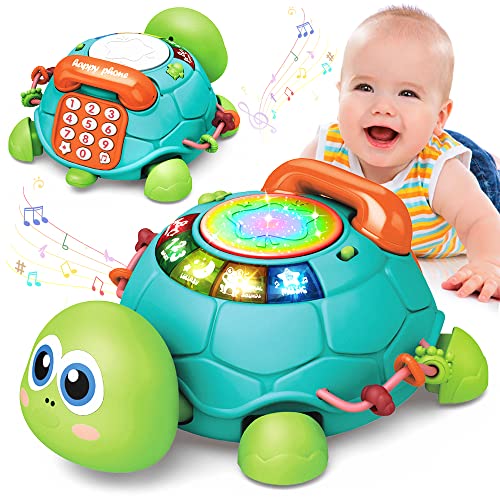
The Jyusmile musical turtle targets babies who enjoy movement, light, and sound. The product listing describes it as a crawling infant toy with musical features and lights. A seven-month-old may watch it move, reach toward it, or try to follow it across a clear floor. This can make it useful for active play when a baby starts showing more interest in moving.
Electronic toys work best when parents use them as an invitation to interact. Place the turtle nearby, allow your baby to watch, and then encourage a reach or crawl without forcing the movement. Sound and light may excite some babies but overwhelm others. I suggest starting at a low volume and stopping play if your child looks tired or upset.
Pros:
- Encourages visual tracking and reaching
- Can make floor play more active
- Combines movement, music, and lights
- May interest babies who ignore still toys
- Supports parent-led crawling games
- Creates an easy chase-and-follow activity
Cons:
- Electronic toys need batteries and care
- Lights and sounds may feel too strong for some babies
- It needs open floor space for the best play
- It may distract from quiet hands-on play
What Amazon Buyers Are Saying
Buyer feedback for moving musical toys often centers on how quickly babies notice the sounds, lights, and motion. Parents may enjoy using the toy to encourage floor time and early movement. Common complaints in this category include noise level, battery needs, or movement that does not suit every floor surface. Since baby reactions vary a lot, I would review current comments about volume, motion, and battery access before purchase.
My Recommendation
I recommend the musical turtle for an active baby who enjoys a clear visual target. It can add energy to floor play, but it should sit beside quieter toys rather than replace them. This is a good choice for movement practice when an adult stays close and controls the play space.
| Category | Rating |
|---|---|
| Movement appeal | 4.5/5 |
| Sensory features | 4/5 |
| Ease of setup | 4/5 |
| Quiet-play flexibility | 3.5/5 |
| Overall Rating | 4/5 |
Music Learning Table with Removable Legs
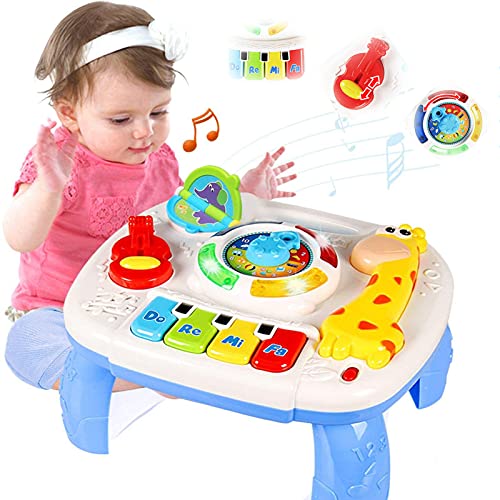
This music learning table gives babies a stationary activity center with buttons, lights, and music. The listing also notes removable legs, which allows floor-level play when a baby is not ready to stand. At seven months, your child may use the top while sitting with support or during supervised floor play. The table can remain useful later as balance and standing skills develop.
I see this as a toy for shared play, not a device that should hold a baby in one place for long periods. Show your child how a button works, then pause so the baby can try. The removable-leg design adds flexibility, but parents should confirm that the table sits firmly in the chosen setup. Keep cords, loose batteries, and other hazards out of reach.
Pros:
- Offers music and lights in one activity surface
- Removable legs can support different play stages
- Gives babies buttons to press and explore
- Works for seated floor play with supervision
- Can remain useful beyond the early infant stage
- Provides a shared parent-and-baby activity
Cons:
- Electronic features may be loud for some homes
- The table needs stable placement on the floor
- It takes more room than a soft sensory toy
- It may offer less value for families seeking quiet play
What Amazon Buyers Are Saying
Parents who buy music tables often mention the appeal of lights, buttons, and several play actions. Many like a design that can transition from floor play to later standing use. Typical concerns may include sound volume, battery changes, size, and how well the legs stay in place. I recommend checking the current listing, assembly notes, and recent customer photos before making a final choice.
My Recommendation
This table is worth considering if you want an electronic toy that can adapt as your baby grows. It is more useful for parents who have space and do not mind music during play. For a seven-month-old, I would use it on the floor with close supervision and keep play sessions short.
| Category | Rating |
|---|---|
| Feature range | 4.5/5 |
| Stage flexibility | 4.5/5 |
| Ease of use | 4/5 |
| Space and value | 4/5 |
| Overall Rating | 4.3/5 |
Hahaland Surprise Barn Plush Set

The Hahaland surprise barn set focuses on soft sensory discovery. The listing describes plush farm animals with rattles, crinkle textures, mirrors, and sensory balls. A baby can hold an animal, find a texture, or listen to a gentle sound during seated or floor play. The soft format makes this set a natural fit for babies who like cuddly objects.
I like plush activity toys for calm moments, diaper-bag use, and parent-led naming games. You can name each animal, copy its sound, or hide one partly under a blanket for your baby to find. This type of play supports attention without relying on bright electronic effects. Inspect every seam, label, and attachment often because babies may pull and chew soft toys.
Pros:
- Soft design suits quiet sensory play
- Offers several textures and sounds
- Farm animals support early language games
- Easy to hold during seated play
- Provides a non-electronic option
- Useful for home or supervised travel play
Cons:
- Plush parts may collect dirt and need care
- Soft toys may not keep every baby engaged for long
- Parents should inspect attachments and stitching often
What Amazon Buyers Are Saying
Buyer themes for plush sensory sets often include soft fabrics, cute animal designs, and the mix of rattle and crinkle details. Parents may also like using the toys for gentle interaction and early naming games. Some complaints in this product type relate to size, cleaning, or a child favoring one animal over the full set. Read the newest reviews for details on texture, construction, and how the set arrives.
My Recommendation
I recommend this barn set for babies who enjoy soft toys and gentle sounds. It works especially well as part of a balanced play space with one active toy and one quiet toy. It is not the strongest pick for a baby who wants motion, but it offers warm, simple sensory play.
| Category | Rating |
|---|---|
| Soft sensory play | 4.5/5 |
| Comfort and handling | 4.5/5 |
| Interactive value | 4/5 |
| Care and durability | 4/5 |
| Overall Rating | 4.3/5 |
How to Choose the Best Toys for 7 Month Old
Choosing the best toys for 7 month old babies means matching play with real skills. At this age, babies often reach with purpose, move objects from hand to hand, explore with their mouths, and respond to sounds. Some babies sit well, while others still need support. Some start to crawl, while others prefer rolling or pivoting. Choose toys that invite practice without expecting every baby to reach the same milestone at the same time.
1. Match the Toy to Current Movement Skills
Start with what your baby can do now. A baby who sits with support may enjoy a soft box, plush animal, or activity panel placed nearby. A baby who reaches across the floor may enjoy a moving turtle that gives a reason to look and move. A stationary music table can work for floor-level play if the legs come off and the surface stays stable.
Do not use a toy to force crawling, sitting, or standing. Place it close enough to invite a reach. Then give your baby time to respond. Rotate the toy if your child becomes frustrated. The best toys for 7 month old play should encourage movement while keeping the activity fun.
2. Check Safety, Size, and Materials
Safety matters more than a long feature list. The American Academy of Pediatrics advises parents to choose toys that suit a child’s age and development. The U.S. Consumer Product Safety Commission also urges families to watch for small parts, loose pieces, broken seams, and battery hazards. Read the age range on the product page and on the packaging.
Avoid toys with parts that can fit fully into a small-parts test cylinder. Keep button batteries and battery compartments secure. Look for smooth edges and strong seams. Wash or clean toys as the maker directs. Since many seven-month-olds still mouth toys, never leave a baby alone with a damaged item or a toy that includes an unsafe loose part.
3. Compare Play Value, Sound, and Long-Term Use
Think about how your baby will use the toy after the first week. A soft pull toy may stay useful for sensory play. A shape set may offer more value as hand control improves. A music table with removable legs may last through several stages, but it may need more space and batteries. A moving electronic toy can be exciting, yet a simple block or plush animal may support longer parent-led play.
Sound level also matters. Choose quiet toys for naps, travel, and shared spaces. Use light and music toys for short, active sessions. I prefer a small mix: one soft toy, one hands-on toy, and one movement toy. This approach gives a baby variety without filling the room with clutter or constant noise.
Final Verdict: Which Should You Buy?
For most families, the Montessori activity set is my top pick because it offers the widest mix of hands-on play. Choose the Hahaland tissue box toy for pulling, the Jyusmile turtle for movement, or the music table for buttons and sound.
The best toys for 7 month old babies should be safe, simple, and easy to use. Pick one that fits your child’s current skills, then supervise every play session.
FAQs Of best toys for 7 month old
What are the best toys for 7 month old babies?
The best options support reaching, grasping, pulling, mouthing, and movement. Good choices include soft sensory toys, activity sets, safe blocks, rattles, and supervised musical toys.
Are electronic toys safe for a 7 month old?
Electronic toys can be suitable when they match the age label and have secure battery compartments. Use them with supervision, control the volume, and keep damaged toys away from your baby.
What toys help a 7 month old learn to crawl?
Moving toys can encourage a baby to look, reach, roll, or crawl toward them. Place the toy on a clear floor and let your baby move at a natural pace.
Should a 7 month old use a shape sorter?
A baby may explore a shape sorter by holding, tapping, and mouthing the large pieces. Full sorting often comes later, so offer help and follow the product age guidance.
How many toys should a 7 month old have?
A small group of rotating toys is enough. Try one soft sensory toy, one hands-on toy, and one movement or music toy to provide variety without clutter.