
Building toys, puzzles, math games, and creative sets are among the best toys for kindergartners.
A kindergarten child learns through hands-on play, but finding a toy that is fun, useful, and easy to manage can feel hard. Some toys lose a child’s interest fast. Others have tiny parts, weak pieces, or skills that are too hard. I reviewed five popular options for building, early math, geography, problem-solving, and open-ended play. These picks can support school readiness while still feeling like real play. I also considered age labels, cleanup, durability, and value. Always check the package age range and supervise children around small parts, as advised by the U.S. Consumer Product Safety Commission.
See the differences between my top picks at a glance.
Magnetic Tiles Building Blocks

This magnetic tile set gives children a simple way to build flat shapes and 3D forms. The bright colors can help kids sort pieces as they play. A kindergartner may build a house, tower, bridge, or made-up creature. The open format also lets the child change the design without following one fixed answer.
I like this style of toy because it supports more than one skill at once. Children practice matching, balance, shape recognition, and planning. They also use hand strength when they connect and pull apart the tiles. Adults can join the play by asking simple questions, such as “How can you make the tower taller?”
Pros:
- Supports open-ended STEM play
- Encourages shape and color sorting
- Helps children practice spatial thinking
- Works for solo play or shared building
- Offers many ways to rebuild and try again
- Provides a screen-free activity for home or classroom use
Cons:
- Small pieces need careful storage
- Large designs may need extra sets
- Young children need supervision around magnets
What Amazon Buyers Are Saying
Amazon buyers commonly look for magnetic tiles that connect with ease and support creative play. Product feedback for this type of set often focuses on color, the number of pieces, and how well children stay engaged. Some buyers also point out that tile sets can spread across the floor quickly. As with any magnetic toy, check pieces often and remove damaged parts at once.
My Recommendation
I recommend this set for a kindergartner who enjoys building without strict rules. It makes a strong choice for creative play and early STEM learning. I would store the tiles in a lidded bin and inspect them before use. Based on its open-ended design and stated features, I rate it 4.5 out of 5.
| Category | Rating |
|---|---|
| Creative learning | 4.5/5 |
| Ease of play | 4.5/5 |
| Versatility | 4.5/5 |
| Storage and value | 4/5 |
| Overall Rating | 4.5/5 |
50 States Map Floor Puzzle

This floor puzzle turns a U.S. map into a hands-on learning game. Children place state pieces together while they notice shapes, borders, and locations. The large format can make the activity feel like a group project. It also gives parents a natural way to talk about where family members live or where they have traveled.
The puzzle offers a calmer type of play than a building set. It asks children to focus, compare shapes, and remember visual clues. A child may first use trial and error, then learn to look at nearby states or map details. The geography theme adds learning value without requiring a worksheet.
Pros:
- Introduces basic U.S. geography
- Supports visual matching and focus
- Encourages parent-child discussion
- Works well for floor play and group use
- Gives children a clear start and finish
- Offers a screen-free way to learn state names
Cons:
- Some state pieces may feel hard for new puzzlers
- Large puzzles need a clear play area
- Interest may depend on a child’s love of maps
What Amazon Buyers Are Saying
Buyers who choose map floor puzzles often praise the mix of learning and play. Common points of interest include the large layout, the state theme, and the chance to work with a child. Some puzzle buyers note that loose pieces need a storage bag or box. Families should also check the finished image and piece fit before leaving a child to play alone.
My Recommendation
This is a good choice for a kindergartner who likes puzzles, maps, or place-based stories. It may not hold the attention of a child who prefers fast building play. Still, it gives adults many easy ways to extend the activity. I rate it 4.3 out of 5 for learning value and shared play.
| Category | Rating |
|---|---|
| Learning value | 4.5/5 |
| Puzzle engagement | 4/5 |
| Family play | 4.5/5 |
| Ease of storage | 4/5 |
| Overall Rating | 4.3/5 |
Quliwise Math and Clock Set

This 2-in-1 set combines counting pieces with a teaching clock. It gives children a physical way to work with numbers instead of only looking at them on a page. A parent can ask a child to count, sort, compare, or show a simple time. The wood-based format may also feel familiar in a preschool or kindergarten learning space.
The clock adds a useful daily-life skill to early math practice. Children can move the hands while adults connect time to meals, school, or bedtime. The number pieces can support short lessons that stop before a child feels tired. I suggest starting with counting and number matching before introducing more complex time ideas.
Pros:
- Combines number work and clock practice
- Supports hands-on counting
- Connects play with daily routines
- Encourages adult-guided learning
- Fits short practice sessions
- Can support sorting and number recognition
Cons:
- Works best with adult guidance at first
- Small math pieces require careful storage
- Children may outgrow basic activities over time
What Amazon Buyers Are Saying
Parents who buy early math manipulatives often value the ability to show numbers in a real, touchable way. They tend to look for clear pieces, useful clock hands, and activities that do not feel like homework. Some buyers may find that a child needs help to use the set with purpose. A short, playful lesson usually works better than asking a young child to complete every activity at once.
My Recommendation
I recommend this set for families who want a focused early math toy. It suits a child who benefits from touching and moving learning pieces. It is less ideal as a fully independent toy, since a young learner may need prompts. I rate it 4.2 out of 5 for practical learning support.
| Category | Rating |
|---|---|
| Early math support | 4.5/5 |
| Hands-on use | 4.5/5 |
| Independent play | 3.8/5 |
| Long-term value | 4/5 |
| Overall Rating | 4.2/5 |
TOMYOU 200-Piece Building Discs
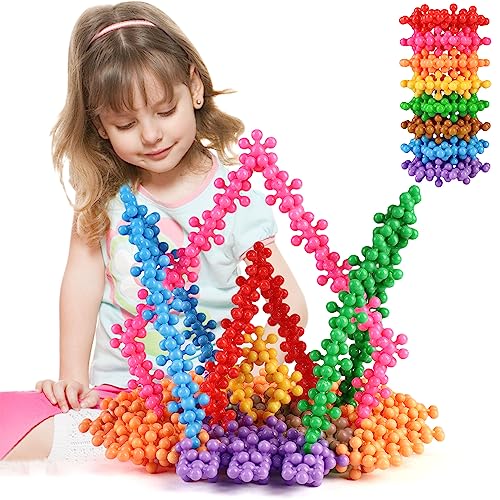
This set uses interlocking discs rather than standard block shapes. Children connect the pieces to make objects, patterns, and simple models. The unusual design can spark new ideas when a child already owns many common blocks. With 200 pieces listed in the product title, it also offers enough parts for solo building or shared play.
Disc-style construction can support fine motor control because children must line up and press the pieces together. It also invites pattern work and repeated trial and error. A child may build a shape from a picture or invent one from scratch. The set works best when the pieces stay sorted in a container so the next play session starts quickly.
Pros:
- Offers a large piece count for creative play
- Uses a different building method than classic blocks
- Supports fine motor practice
- Encourages patterns and simple design
- Works for solo or shared construction
- Can provide many project ideas without batteries
Cons:
- Disc connections may take practice
- Many small pieces can create a cleanup task
- Children may need examples before inventing designs
What Amazon Buyers Are Saying
Buyers of large construction sets often like the number of pieces and the chance to build many designs. They also tend to mention whether the connectors feel easy for children to use. Some families may find that disc toys work better after an adult shows a few basic patterns. As with all sets with many parts, a storage bin can make the toy more practical.
My Recommendation
This set deserves a place on the shortlist for a kindergartner who likes to build and repeat designs. It offers a fresh alternative to magnetic tiles and regular bricks. I would introduce it with a small project, then let the child explore. I rate it 4.1 out of 5 for creativity, piece count, and fine motor play.
| Category | Rating |
|---|---|
| Creative building | 4.3/5 |
| Fine motor play | 4.2/5 |
| Piece variety | 4.3/5 |
| Cleanup | 3.7/5 |
| Overall Rating | 4.1/5 |
Tough Magnetic Blocks Starter Set

This starter set uses magnetic blocks for simple construction play. The product title presents it as a tough tile option for children age three and older. It also states that the pieces work with major brands, which can help families add variety to an existing collection. Children can use the set to make flat patterns or taller structures.
Magnetic construction works well for children who like quick results. Pieces connect with less effort than some traditional building parts. That can help a child test an idea, take it apart, and try again. The starter format may also suit a classroom shelf, travel activity, or home play space with limited room.
Pros:
- Offers quick magnetic connections
- Supports flat and three-dimensional designs
- May work with other major-brand tiles
- Fits STEM and spatial play
- Starter format can be easy to introduce
- Works for individual or group building
Cons:
- A starter set may not make very large models
- Magnetic parts need regular inspection
- Pieces still need a safe storage solution
What Amazon Buyers Are Saying
Customers who shop for magnetic starter sets often focus on connection strength, bright designs, and compatibility with other tiles. They may also compare the set size with the price. Some buyers want more pieces after a child becomes interested in building. Parents should follow the package safety guidance and remove any piece that cracks or opens.
My Recommendation
I recommend this option for a first magnetic construction set or for a child who wants to add pieces to an existing collection. Its stated compatibility may improve value for families with other magnetic tiles. It is not the best pick if you want one set to create very large builds. I rate it 4.3 out of 5.
| Category | Rating |
|---|---|
| Building fun | 4.4/5 |
| Ease of connection | 4.4/5 |
| Compatibility value | 4.2/5 |
| Set size | 4/5 |
| Overall Rating | 4.3/5 |
How to Choose Best Toys for Kindergartners
The best toys for kindergartners should match a child’s skills, interests, and play space. A good toy does not need many buttons or complex rules. It should invite the child to try, change, and try again. Before you buy, think about what the toy teaches, how the child will use it, and how easy it will be to store.
1. Match the Toy to the Child’s Play Style
Watch how the child plays now. A child who builds with boxes may enjoy magnetic tiles or interlocking discs. A child who likes books and maps may prefer the 50 states puzzle. A child who asks about numbers may get more use from a math and clock set.
Also consider attention span. A puzzle has a clear goal. A building set has no single right answer. Both styles can help, but they serve different moods. For a gift, choose a toy that fits the child rather than one that only looks educational.
2. Check Skills, Parts, and Safety
Read the age label before purchase. Age labels consider the toy’s design and possible risks. The CPSC warns families to keep small parts away from children who may put items in their mouths. Magnets need extra care. Do not use a magnetic toy if a piece breaks, cracks, or exposes a magnet.
Look at the size of the pieces and the way they connect. A kindergartner should be able to use the toy without constant frustration. For a math set, check whether the numbers look clear. For a puzzle, check the piece count and the finished size. For building toys, think about whether the pieces fit small hands.
3. Compare Learning Value, Durability, and Storage
Learning value matters, but the toy must also invite repeat play. Open-ended building sets often offer many projects. Puzzles can build focus and visual matching. Math manipulatives can support short lessons. Choose a toy that gives the child a reason to return to it.
Storage also affects value. A 200-piece set needs a box or bin. A floor puzzle needs a flat place to build and a way to keep its pieces together. Magnetic tiles may need their own container. Easy cleanup makes it more likely that adults will offer the toy again.
Finally, compare the total value, not just the price. A lower-cost toy may be a good buy if a child uses it often. A costly set may not be worthwhile if it sits unused. I look for toys that support several skills and allow more than one way to play. That is why building sets rank highly among the best toys for kindergartners.
Final Verdict: Which Should You Buy?
My top pick is the Magnetic Tiles Building Blocks set. It offers the strongest mix of creative play, STEM skills, and repeat use. Choose the math set for number practice or the map puzzle for geography. The tough magnetic starter set suits smaller collections.
The best toys for kindergartners make learning feel natural. Pick a safe, age-appropriate toy that matches the child’s interests and your available space.
FAQs Of best toys for kindergartners
What are the best toys for kindergartners who love building?
Magnetic tiles and interlocking building discs are strong choices. They support design, fine motor skills, and spatial thinking.
Are educational toys better than regular toys for kindergarten?
Not always. The best toy offers useful skills while still feeling fun. Open-ended building and pretend play can teach planning, language, and problem-solving.
Are magnetic toys safe for kindergartners?
Use magnetic toys only as directed. Check them often, keep damaged pieces away, and supervise children around magnets and small parts.
Which kindergarten toys help with early math?
A counting and teaching clock set can support number recognition, counting, sorting, and basic time concepts through hands-on play.
How do I choose a toy for a five-year-old?
Consider the child’s interests, skill level, attention span, and play space. Also check the age label, piece size, storage needs, and safety guidance.