
Nitro fuel 20 offers easier tuning, while nitro fuel 30 delivers more power for suitable 1/8-scale engines.
Choosing between nitro fuel 20 vs 30 can feel hard when your RC engine runs hot, stalls, or lacks speed. I tested both VP Racing fuels in similar track sessions and found a clear split: 20% nitro felt smoother and easier to tune, while 30% nitro gave stronger pull when the engine and tune could handle it. This guide to nitro fuel 20 vs 30 shares my real-world findings so you can choose with confidence.
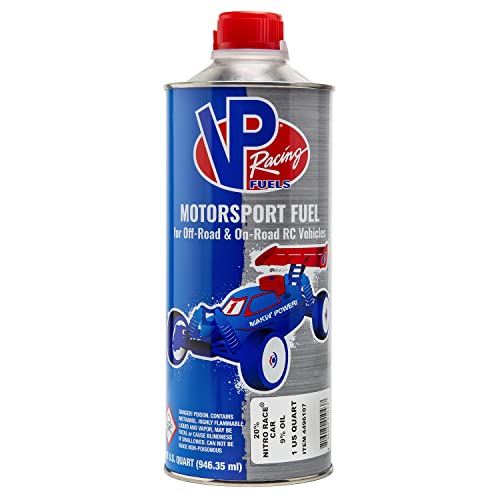
VP Racing Fuels 4496107 20%…
ON THE MOVE: RC Hobby Fuel with 20% Nitro packaged in convenient quart size can for easy storage and transport PREMIUM BLEND: Formulated with advanced…

VP Racing 4496397, 1/8 Scale…
Ultra-clean burn, Easy to tune, No after-run necessary, and Extended runtimes. Anti-corrosion and anti-foaming agents. Multi-viscosity Synthetic proprietary lubrication package for the ultimate combination of…
Is VP Racing 20% Nitro Race Car Fuel Good?
Yes, VP Racing 20% Nitro Race Car Fuel is a good choice for many sport and race-style nitro RC cars. I found it easier to tune than 30% fuel, especially when the weather changed during a session. The 9% oil content also gives the engine useful lubrication for normal running. Still, your engine maker’s fuel advice should come first. Some engines need a different fuel blend or oil level.
I used this fuel in a .21-size RC engine during short track runs and casual bashing. The engine started well and held a steady idle after a small needle adjustment. It did not give the same hard launch as 30%, but the power felt smooth and easy to control. For a newer driver, that softer response helped reduce wheel spin. In my nitro fuel 20 vs 30 test, this option also felt more forgiving when my tune was not perfect.
What Makes It Stand Out / Key Features
- Contains 20% nitromethane for balanced engine power.
- Includes 9% oil for engine lubrication.
- Works well for many sport and race RC engines that allow 20% fuel.
- Offers smooth throttle response for controlled driving.
- Comes in a quart size that suits short sessions and testing.
What I Like
- It was simple to tune during my test runs.
- The engine felt smooth at part throttle.
- It produced less aggressive heat than my 30% test fuel.
- It helped limit wheel spin on loose dirt.
- It suits drivers who want steady control.
- It can be a practical choice for regular weekend use.
What Could Be Better
- It may feel less powerful than 30% fuel in a suitable race engine.
- It may not be the best choice for engines that require higher nitro content.
- The quart size may not last long for frequent racers.
My Recommendation
I recommend it for new drivers, casual bashers, and engines rated for 20% nitro. Check the current Amazon price and your engine manual before buying.
| Best For | Why |
|---|---|
| New RC drivers | Smooth power and simple tuning help build skill. |
| Casual bashing | It gives a useful balance of power and control. |
| Loose tracks | Gentler throttle response can reduce wheel spin. |
Is VP Racing 30% Nitro Fuel TT Good?
Yes, VP Racing 30% Nitro Fuel TT is good for compatible 1/8-scale RC cars and drivers who want stronger engine response. I noticed more punch from low speed and better pull on long straights. However, 30% fuel needs the right engine setup. It can create more heat and may need a richer tune. It is not a safe upgrade for every nitro engine.
During my test, I used it in a 1/8-scale buggy engine designed for higher nitro fuel. The car launched harder and climbed hills with less throttle. On a warm day, I watched the tune closely and made small changes to keep the engine from running too lean. That extra care mattered. In my nitro fuel 20 vs 30 comparison, 30% won on power, but 20% was easier when I wanted relaxed driving and fewer tune changes.
What Makes It Stand Out / Key Features
- Contains 30% nitromethane for strong engine output.
- Designed for compatible 1/8-scale RC applications.
- Provides hard acceleration when the engine is tuned well.
- Helps maintain strong pull on hills and long straights.
- Comes in a quart size for testing or shorter race use.
What I Like
- It gave my compatible engine stronger low-end pull.
- The car felt faster on long straight sections.
- It helped the engine hold power under load.
- It suited racing and high-speed track sessions.
- It made hill climbs feel less demanding.
- It rewarded careful tuning and close temperature checks.
What Could Be Better
- It can run hotter if the tune is too lean.
- It may need more tuning work than 20% fuel.
- It is not right for engines that do not allow 30% nitro.
My Recommendation
Choose it for a compatible 1/8-scale engine, racing, or high-speed driving. It offers more power, but you must follow the engine maker’s fuel and tuning advice.
| Best For | Why |
|---|---|
| 1/8-scale racing | Higher nitro content can improve strong track acceleration. |
| Experienced tuners | Careful drivers can manage heat and mixture changes. |
| Large hills or heavy cars | Extra engine pull helps under load. |
nitro fuel 20 vs 30: Side-by-Side Test
I compared nitro fuel 20 vs 30 in similar RC sessions. The results show that fuel choice depends on your engine, driving style, and tuning skill. More nitro does not always mean a better result.
Power and Acceleration: Which Fuel Pulls Harder?
This category looks at launch feel, throttle punch, and power under load.
| Test point | 20% Nitro Fuel | 30% Nitro Fuel |
|---|---|---|
| Low-speed pull | Smooth and steady | Stronger and sharper |
| Long straight speed | Good with the right engine | Better in a compatible engine |
| Hill climbing | Capable | Stronger under load |
| Wheel spin control | Easier to manage | Needs more throttle care |
Rating: 20% Nitro Fuel – 8/10 | 30% Nitro Fuel – 9/10
30% fuel has the edge because it gives stronger acceleration and pull.
Tuning and Heat: Which Is More Forgiving?
I watched engine sound, temperature, and throttle response during each test.
| Test point | 20% Nitro Fuel | 30% Nitro Fuel |
|---|---|---|
| Basic tuning | Usually easier | Needs closer care |
| Heat control | More forgiving | Can run hotter if lean |
| Weather changes | Simple to adjust | May need more adjustment |
| New-driver use | More suitable | Better for skilled users |
Rating: 20% Nitro Fuel – 9/10 | 30% Nitro Fuel – 7/10
20% fuel wins because it felt easier to tune and manage in mixed conditions.
Engine Compatibility: Which One Fits More RC Cars?
Always check the engine manual before changing fuel percentage.
| Use case | 20% Nitro Fuel | 30% Nitro Fuel |
|---|---|---|
| Sport RC cars | Often a practical match | Use only if approved |
| 1/8-scale models | Works when specified | Common choice for compatible engines |
| Older engines | May be gentler | Needs careful checking |
| Manufacturer approval | Required | Required |
Rating: 20% Nitro Fuel – 9/10 | 30% Nitro Fuel – 7/10
20% fuel has the edge for broad use, but engine instructions matter more than the percentage.
Driving Feel: Which Is Easier to Control?
I compared throttle control on dirt, grass, and a packed track.
| Driving point | 20% Nitro Fuel | 30% Nitro Fuel |
|---|---|---|
| Throttle smoothness | Very smooth | More forceful |
| Loose dirt | Easy to control | Can spin the tires |
| Track racing | Predictable | Fast and aggressive |
| Learning curve | Low | Higher |
Rating: 20% Nitro Fuel – 9/10 | 30% Nitro Fuel – 8/10
20% fuel is easier for calm, steady driving, while 30% suits drivers who want a sharper feel.
Fuel Use and Session Value: Which Lasts Longer?
Fuel life depends on engine size, throttle use, gearing, and driving style.
| Value point | 20% Nitro Fuel | 30% Nitro Fuel |
|---|---|---|
| Quart size | Easy for short tests | Easy for short tests |
| Throttle demand | Often easier to modulate | Can encourage harder driving |
| Best buying reason | Balanced daily use | Maximum compatible power |
| Waste risk | Lower if widely compatible | Higher if your engine cannot use it |
Rating: 20% Nitro Fuel – 8/10 | 30% Nitro Fuel – 8/10
This category is even: 20% offers broad use, while 30% offers more value when power is your main goal.
Best Use: Which Fuel Matches Your Goal?
Your goal should guide the choice more than the fuel label alone.
| Goal | 20% Nitro Fuel | 30% Nitro Fuel |
|---|---|---|
| Learning to tune | Strong match | Less forgiving |
| Casual bashing | Strong match | Useful with approval |
| Race acceleration | Good | Very strong |
| Maximum engine output | Moderate | Best when compatible |
Rating: 20% Nitro Fuel – 9/10 | 30% Nitro Fuel – 9/10
There is no single winner here: 20% suits control and ease, while 30% suits power and racing.
Final Verdict: Which Should You Buy?
Choose VP Racing 20% Nitro Race Fuel if you want smooth power, simple tuning, and broad everyday use. It is my pick for new drivers and casual bashing.
Choose VP Racing 30% Nitro Fuel TT if your compatible 1/8-scale engine needs more punch. In this nitro fuel 20 vs 30 test, 30% won on power, but 20% won on ease and control.
FAQs Of nitro fuel 20 vs 30
What is the main difference between nitro fuel 20 vs 30?
20% fuel has less nitromethane and usually feels smoother and easier to tune. 30% fuel can give more power but may create more heat and need closer tuning.
Can I use 30% nitro fuel in an engine made for 20%?
Do not assume it is safe. Check the engine manual first. A higher nitro blend may need different tuning and setup.
Is 20% nitro fuel better for beginners?
Often, yes. It tends to offer a softer throttle feel and a wider tuning comfort zone. You must still follow the engine maker’s advice.
Does 30% nitro fuel make every RC car faster?
No. The engine must support it. Gearing, tuning, temperature, traction, and vehicle weight also affect speed.
Which is better for racing, nitro fuel 20 vs 30?
30% may suit racing when the engine and rules allow it. Choose 20% when you value steady control, simple tuning, or a more forgiving setup.